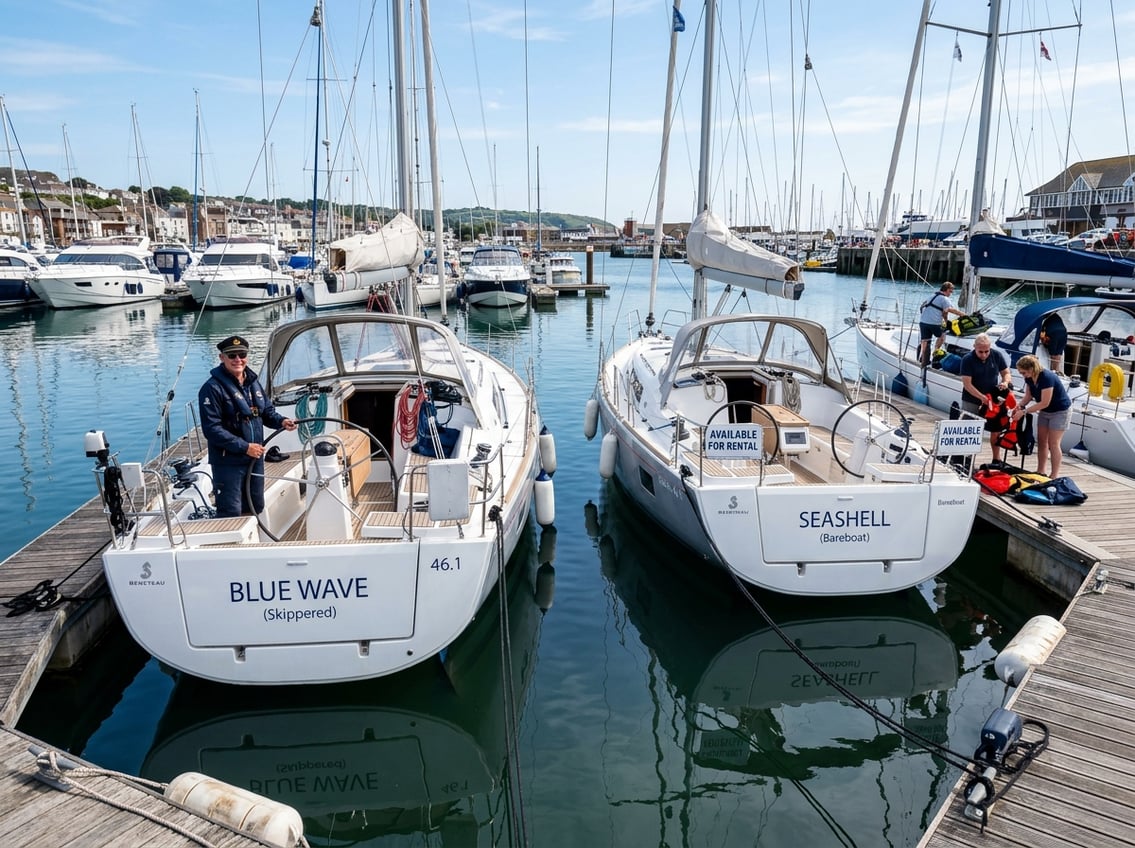
Skippered or Bareboat? Cost and Safety Guide
Picking between a skippered or bareboat charter really comes down to who's in charge of the boat. That one choice shapes everything: cost, safety, and, honestly, how much stress lands on your shoulders.
With a bareboat charter, you're the captain—navigation, docking, weather, all of it. A skippered charter means a pro handles those jobs. Bareboat is cheaper per day but you need sailing certifications. Skippered charters cost about $300 to $500 more per day, but guests don't need any experience.
But let's be honest, it's not just about money or paperwork. The trip vibe changes a lot depending on who's steering.
Which Option Fits Your Trip
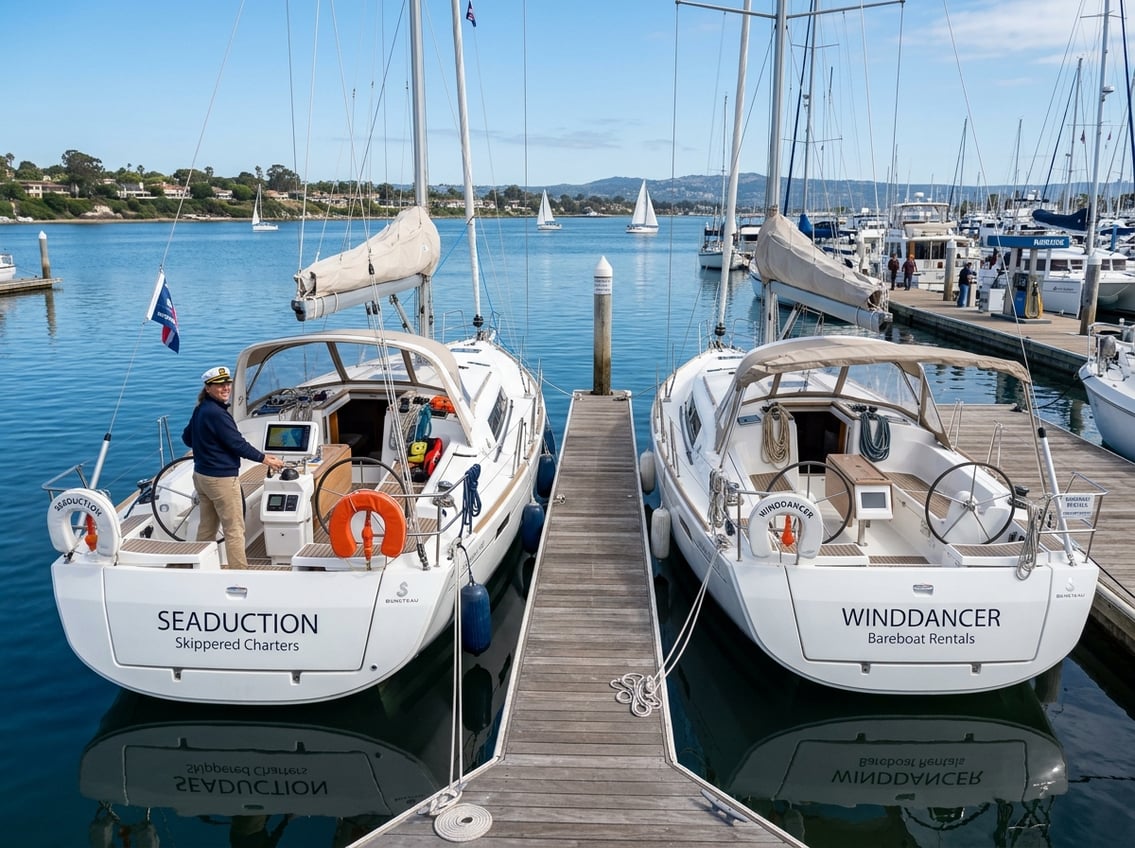
What works for you? It really depends on sailing experience, group size, and what everyone expects from the trip.
A seasoned sailor with ocean miles under their belt needs something totally different than, say, a family's first time on a boat.
Who Bareboat Suits Best
Bareboat charters are for people who already know their stuff. If you've got an ASA 104 certificate, a logbook full of overnight passages, and you're comfortable with boat handling, you'll do fine with total independence.
Small groups of experienced sailors or couples who've been cruising for years get the most out of bareboat. Sailing club friends splitting costs? That works too. The boat and schedule are all yours—no one's telling you when to leave or where to go.
Money matters. A 38-foot sloop in peak season might be $400 to $550 per day. If you split that five ways, a week on the water can be under $900 per person, including food and fuel.
When a Skippered Charter Makes More Sense
No license? Don't sweat it. A skippered charter removes all the certification hassle, since the captain takes full responsibility.
First-timers really benefit. Same goes for families with little kids—parents can't juggle both toddlers and a 40-foot boat. Mixed-experience groups avoid those awkward "who does what" moments when a beginner grabs the wrong line.
There's a learning angle too. Plenty of bareboat sailors started with a skippered trip, caught the sailing bug, earned their ASA ticket, then came back later to skipper themselves.
How Group Expectations Change the Right Choice
Six college friends, all with sailing backgrounds? Go bareboat. A family reunion where only Uncle Steve has touched a tiller? Skippered is probably the way to go.
It gets tricky when one person wants to sail and everyone else just wants to chill. On a bareboat, everyone pitches in. On a skippered charter, guests can help—or just relax.
Talk about expectations early. It saves a lot of headaches.
Where Crewed Charter and Flotilla Fit In
A crewed yacht is next level—think chef, first mate, maybe more. It's like checking into a floating boutique hotel. Meals, drinks, everything's handled. These are great for honeymoons, big anniversaries, corporate getaways, or groups with guests who need extra help.
Flotilla sailing is totally different. There's a lead boat with pros, and a bunch of bareboats following along. Each boat does its own thing, but help is just a radio call away. It's popular if you want independence but like the idea of backup.
What You Actually Pay On Board
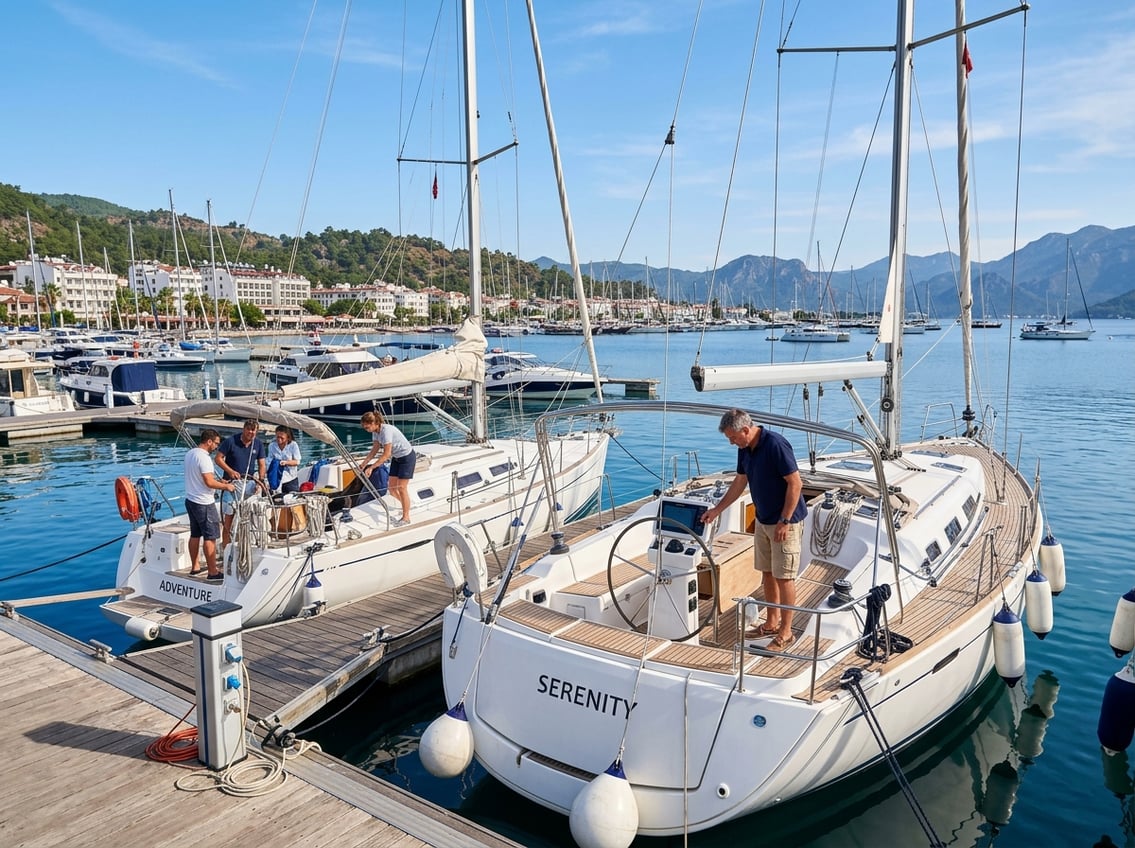
The base charter rate is just the start. Actual costs stack up: skipper fees, food, fuel, marinas, and sometimes an advance provisioning allowance (APA).
Base Charter Rate Versus Total Trip Spend
A bareboat 38-foot sloop in the San Juans might list at $475 per day—so about $3,325 for a week. That sounds pretty good, but you'll need food, fuel, and places to tie up.
A skippered charter often starts at $5,500 to $8,500 per week because the captain's fee is often included. Crewed yachts can hit $8,000 to $22,000 per week, but those are usually all-inclusive.
So, always look at total trip spend, not just the daily sticker price.
Skipper Fees, Cabin Space, and Meals
A professional skipper usually runs $300 to $500 per day extra. For a week, that's $2,100 to $3,500.
You'll need to give the skipper a cabin. On a four-cabin boat, that leaves three cabins for guests. On a three-cabin boat, you lose a third of your sleeping space. That can be a dealbreaker for some groups.
Most skippered charters expect you to feed the captain. Some people just buy extra groceries, others hand over a meal allowance.
Provisioning, Fuel, and Marina Charges
Budget about $600 for food and drinks for five people over seven days.
Fuel isn't too bad on a sailboat—maybe $100 to $200 for the week, depending on how much you use the engine. Marina and mooring fees? Expect $150 to $250, but it's all over the map depending on where you go.
Here's a quick look at a week-long trip for five people:
| Expense | Bareboat | Skippered |
|---|---|---|
| Base boat rate | $3,325 | $3,325 |
| Skipper fee | $0 | $2,100 to $3,500 |
| Provisioning | $600 | $600 |
| Fuel | $150 | $150 |
| Marina/mooring | $200 | $200 |
| Total | ~$4,275 | ~$6,375 to $7,775 |
| Per person | ~$855 | ~$1,275 to $1,555 |
When APA or Advance Provisioning Allowance Applies
An APA is a cash fund paid upfront, usually 20% to 35% of the base rate. The captain or crew uses it for food, fuel, marina fees, and other running costs.
APAs are common on crewed yacht charters. They're rare on basic skippered trips, but you'll see them on higher-end bookings. At the end, the captain hands over receipts and returns what's left.
If your charter mentions an APA, ask what's included. Sometimes alcohol is covered, sometimes not. It's best to nail this down early.
Licences, Experience, and Booking Approval
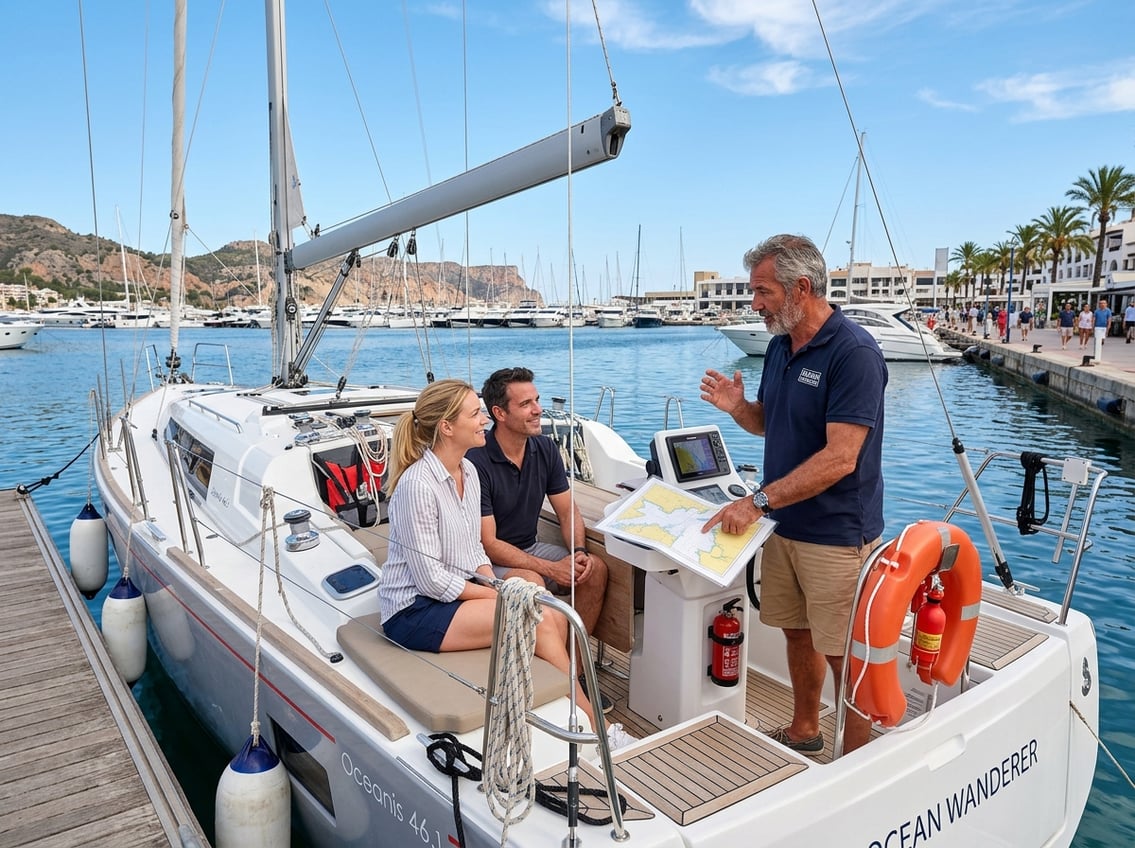
Certification requirements are strict for bareboats but not for skippered charters. You need proof of sailing skills for bareboat; skippered charters don't care.
What Charter Companies Check Before Handover
Charter companies want to protect their boats. Before you get the keys to a $200,000 yacht, they'll ask for a sailing resume—certification cards, a detailed logbook, maybe even a quick quiz about boat handling.
On departure day, there's a checkout. A rep walks you through the boat, shows you the systems, and sometimes watches you maneuver in the marina. If they're not convinced, they might refuse handover or suggest you take a skipper for a day.
If you booked a skippered charter, you skip all this. The captain handles the checkout, and you just relax.
Common Certificates and Their Role
In the US, ASA (American Sailing Association) is the big one:
- ASA 101 (Basic Keelboat): entry-level stuff.
- ASA 103 (Basic Coastal Cruising): adds navigation basics.
- ASA 104 (Bareboat Cruising): usually the minimum for bareboat.
- ASA 106 (Advanced Coastal Cruising): sometimes needed for tricky areas.
Internationally, the RYA Day Skipper (UK) and IYT Bareboat Skipper are widely accepted.
Why Logged Experience Matters as Much as the Card
A certificate just means you passed a class. A logbook shows you've actually sailed. Some companies care more about sea miles than classroom time.
If you have ASA 104 but only 50 miles logged, you might get pushback on a week-long trip. Someone without a card but with 3,000 miles and a military background might get approved.
So, keep a logbook. Note dates, routes, weather, boat types—anything that shows real-world experience.
What Changes if No One on Board Is Qualified
If nobody has the right certification or experience, you can't charter bareboat. The company won't risk it—they'll either say no or insist you hire a skipper.
It's not personal. It's about safety and insurance. An unqualified skipper risks the boat, crew, and even the environment. Insurance requires a qualified person at the helm, and breaking that rule can void your coverage.
The easy fix: book a skippered charter, enjoy the trip, learn from the captain, and come back next time ready to go bareboat.
Safety, Responsibility, and Risk Exposure
Safety is where the bareboat vs. skippered choice really matters. Whoever makes the navigation and weather calls holds the risk for everyone.
Who Is Responsible for Navigation and Weather Decisions
On a bareboat, you're in charge. That means reading forecasts, making the call to leave port, picking the route, and changing plans if the weather turns.
On a skippered charter, the captain makes those calls. A good skipper checks several weather sources, understands local quirks, and knows when a forecast that looks fine on an app actually means rough seas.
This isn't a small detail. Weather decisions are the biggest safety factor in coastal sailing.
Boat Handling Under Pressure
Sailing on calm days? Most folks can handle that with some basic training. The real test hits when things go sideways—a sudden wind shift, an engine that just refuses to start in a packed marina, a dragging anchor at 2 a.m., or someone on board gets hurt.
Professional skippers have faced these problems many times. They react quickly, delegate tasks, and sort things out while keeping everyone safe.
A bareboat charterer, especially if it's their first time, has to think through every step, all while the crew gets nervous. Training helps, but honestly, nothing beats hands-on experience.
Anchoring, Mooring, and Marina Arrival Risks
Most charter accidents don't happen out at sea—they happen when docking or anchoring. People misjudge the wind at the fuel dock, drop anchor on bad holding ground, or come in way too fast to a mooring ball. That's when insurance gets involved.
Anchoring somewhere new? You need to read the chart, check the seabed, figure out your swing, and keep an eye on nearby boats. Get it wrong, and you might drift into another boat during the night. Skippers know which anchorages are solid and which ones look fine on the chart but turn risky with certain winds.
Why Unfamiliar Waters Change the Equation
Local knowledge really matters. Take the San Juan Islands—tidal currents can rip through narrow passes at over four knots. Rocks marked as "awash at low tide" sometimes lurk just under the surface. Shipping lanes cross right where pleasure boats travel.
A skipper who knows these waters brings something no chart plotter can offer. They remember which passages to time carefully, which marinas have weird approaches, and which anchorages become rough in a northwesterly.
If you're new to an area, it's smart to admit there's extra risk and to plan a bit more cautiously.
Daily Experience at Sea
How your charter feels day to day depends on how much work you want to do and how much local knowledge shapes the trip. Both options offer good sailing, but honestly, each day feels pretty different.
Freedom, Privacy, and Workload
Bareboat charters give you total privacy. No extra person on board, so you eat, sail, and anchor whenever you feel like it. But there's a catch—someone always has to be on watch, navigate, cook, and handle the anchor.
With a skipper, you give up a bit of privacy but lose a ton of stress. The captain takes a cabin and shares the space, but you don't have to sweat over docking or planning routes. For some, that's a huge relief.
Learning Opportunities With and Without a Skipper
Sailing with a pro skipper? It's easily one of the fastest ways to actually learn. A good captain explains tidal math, shows you how to trim sails, talks through weather, and lets you try maneuvers with a safety net.
On bareboat, you learn by doing. Every anchoring, every navigation call, every weather decision—it all falls on you. You mess up, you fix it. That's how experienced sailors get better, fast.
Both ways build skills. If you're a beginner, skippered is safer. If you've got a foundation, bareboat is tougher but pays off more.
How Local Knowledge Improves the Itinerary
A skipper who's spent years in one area knows the stuff guidebooks miss. Hidden anchorages that stay calm when the wind picks up. A bay where bald eagles nest. The perfect spot to catch a sunset. Maybe even a tiny restaurant on a dock that tourists never find.
These details can turn a decent trip into something unforgettable. Bareboat charterers can research forever and still miss out. It's a big, often overlooked perk of having a skipper.
The Trade-Off Between Control and Ease
There's always a bit of tension here. On a bareboat, you control everything, but you're also responsible for everything. With a skipper, things are easier, but someone else makes the final call if plans change.
Most people figure out what they like after just one trip. Some love the challenge and can't imagine letting anyone else steer. Others try bareboat, get stressed out, and switch to skippered next time.
No right or wrong answer. The best charter fits your group's vibe—not just the paperwork.
Booking Scenarios and Practical Recommendations
Theory's fine, but real life is messier. Here's how different groups might want to approach the bareboat vs. skippered decision.
Best Choice for Couples, Families, and Friends
Couples with ASA 104 or higher: Bareboat is perfect. Two skilled sailors on a 32- to 38-foot boat get all the freedom and the lowest costs.
Families with kids under 10: Go with a skipper. Kids need attention, and trying to parent and handle the boat at the same time is just stressful. The captain keeps the boat safe, parents focus on the kids.
Groups of friends (4 to 6 people): If two or more people have real sailing experience and certifications, bareboat works and saves money. For groups with zero experience, a skipper makes the trip fun instead of nerve-wracking.
A Smart First Charter Plan
For your first charter, here's a plan that actually works:
- Book a five- to seven-day skippered charter in an easy cruising area.
- Let the captain know you want to learn, not just be a passenger.
- Take the helm when it's safe. Practice sail trim. Ask questions—lots of them.
- Afterward, sign up for ASA courses (101 through 104) at a local sailing school.
- Next season, come back for a bareboat charter in the same area, using what you learned.
This approach builds real confidence and helps you figure out what kind of charter suits you best.
When to Upgrade to a Crewed Yacht
Crewed charters make sense when you're celebrating, not just sailing. Think honeymoons, big birthdays, retirements, or company events—a full crew handles everything.
If you have guests with mobility or health issues, the extra hands are a game-changer. A chef who cooks to your needs, a captain who makes things comfortable, a mate who helps everyone move around safely—it all adds up.
Price-wise, a crewed charter for six can run $1,500 to $3,500 per person per week, all-inclusive. Stack that up against a fancy resort, and honestly, it's often a better deal.
Questions to Ask Before You Confirm the Booking
So, before you sign anything, it's smart to actually talk things through with the charter company.
- What kind of certifications and logged experience do they expect for a bareboat?
- Is the skipper fee already in the price, or do they tack it on later?
- Does the skipper have a dedicated cabin, and if so, which one?
- What exactly does the APA cover, and what's not included?
- Is the security deposit refundable? What sort of damage does it cover?
- If your group wants to switch from bareboat to skippered before the trip, is that possible?
- If bad weather changes the itinerary, what's their policy?
Honestly, if you get straight answers on these, you'll avoid a ton of headaches later.