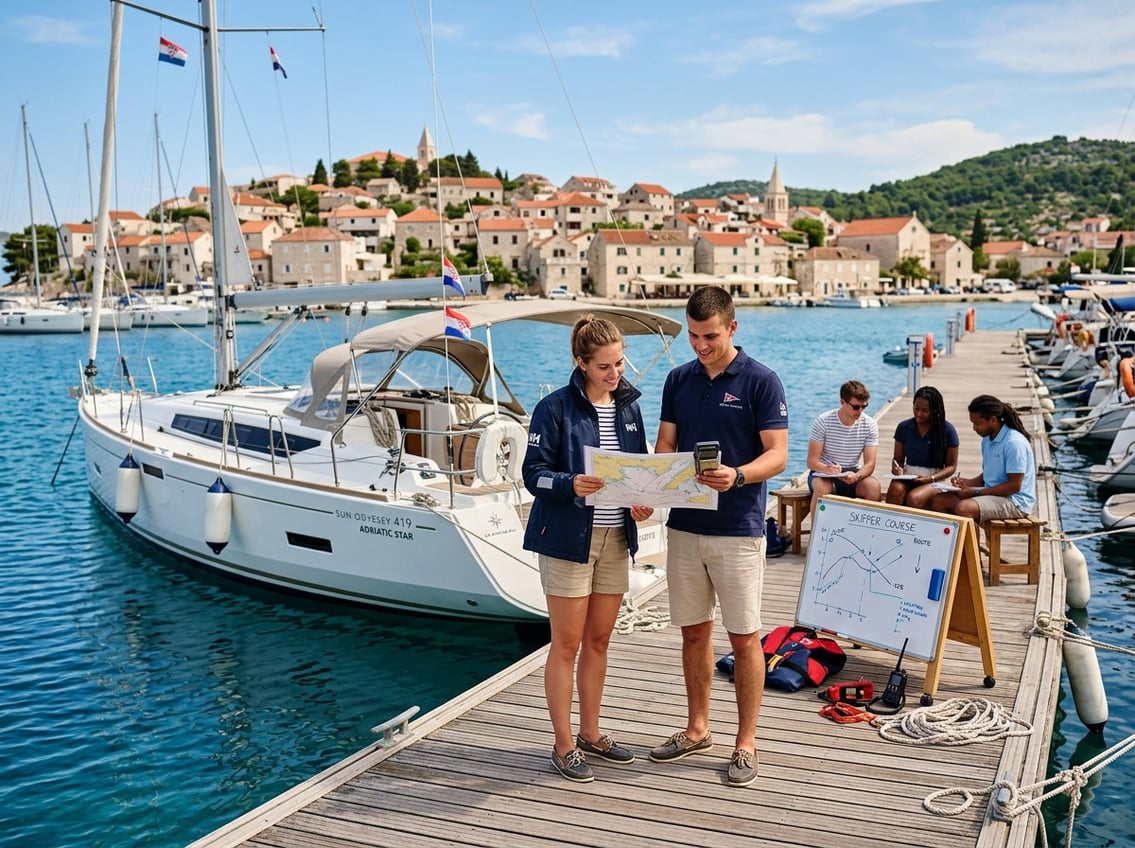
Skipper Licence in Croatia: Costs, Courses and Timing
Thinking about getting your skipper licence in Croatia? If you want to sail the Adriatic on your own, it’s probably the best move you can make. The process is pretty simple, doesn’t break the bank, and honestly, it’s way quicker than most expect.
Most people go for the Boat Skipper Category B certificate, which covers boats up to 30 gross tons. Courses last anywhere from 2 to 5 days, cost about €400 to €600, and include both a written theory exam and a practical test. These cover navigation, safety at sea, and boat handling. You don’t need previous sailing experience, and you have to be at least 18.
The licence type, course format, and total price all depend on what you actually want to do out there.
Which Licence You Actually Need
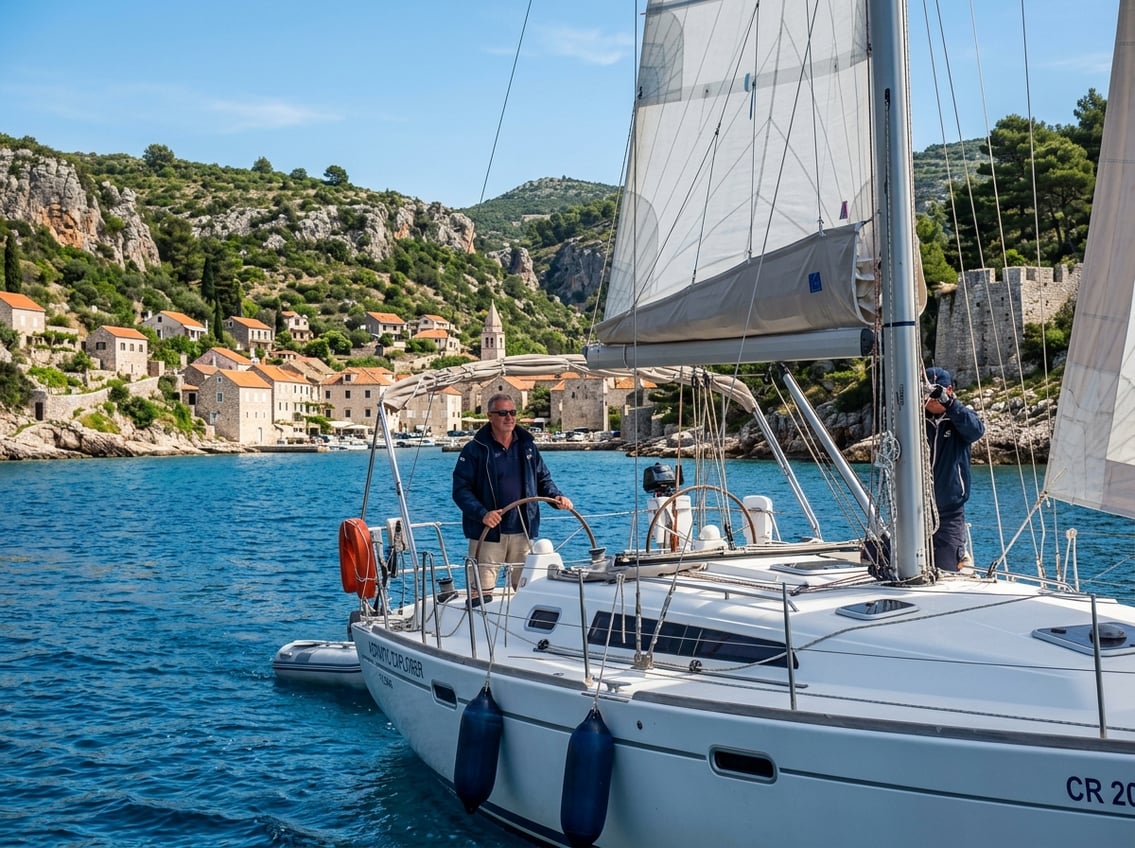
Croatia’s system splits skipper licences into a few main categories. The right one honestly just depends on your plans. Most people just need one, but if you want to work as a skipper, it’s a different story.
Boat Skipper Category B for Private Use
This is what almost every recreational sailor in Croatia gets. With the Boat Skipper Category B, you can take the helm of anything up to 30 gross tons in coastal waters. That covers pretty much every bareboat yacht charter on the Adriatic.
You’ll be allowed to navigate in areas marked as IIa, III (no restrictions), and IV under Croatian law. In plain English, that means you can go island-hopping from Split to Dubrovnik or cruise around Zadar’s islands—basically, you’re good for all Croatian territorial waters.
You need to be at least 18. No one asks for previous sailing experience at the exam, but it sure helps if you’ve spent some time on a boat.
When a Category C or Professional Route Makes Sense
Category C is for smaller boats and limited areas. Almost nobody chartering a yacht goes this route.
If you want to get paid to skipper charter boats, you’ll need extra certification, log your sea time, and meet stricter medical rules. Professional skipper courses can last up to 14 days and they’re a lot more demanding, honestly.
Foreign Certificates and Charter Recognition in Croatia
Croatia accepts a bunch of foreign sailing certificates. The ICC (International Certificate of Competence) is usually fine. RYA Day Skipper or higher, and IYT Bareboat Skipper, are also accepted by most charter companies.
But here’s the thing: every charter agency seems to have its own quirks. A VHF radio operator’s licence is almost always needed in addition to your sailing certificate. Port authorities in Croatia issue both, but if you’re coming with a foreign licence, double-check it’s valid for Croatian waters before you show up at the dock.
Course Formats and What They Cover
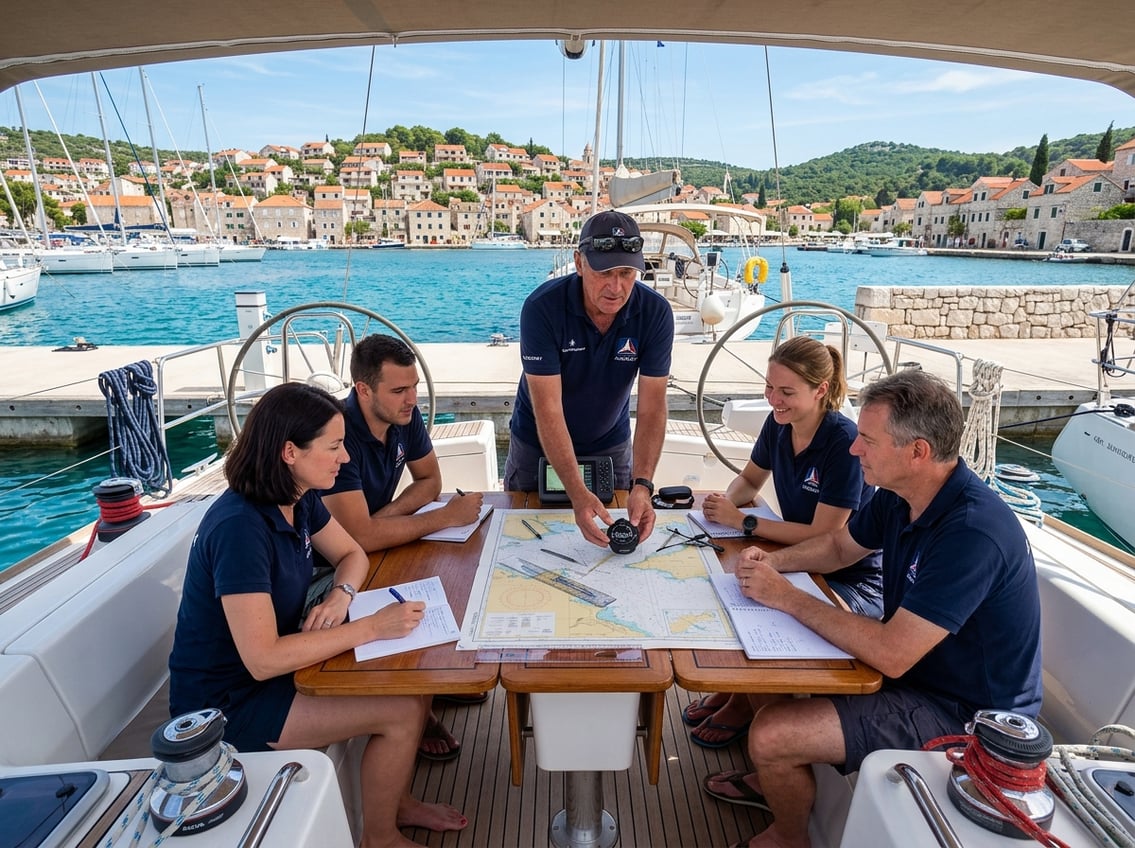
Training options in Croatia range from quick exam-prep sessions to longer courses with on-water practice, mentorship, and sometimes even staying aboard a training vessel.
Short Theory Courses and Exam Preparation
If you just want to get it done, the fastest path is an intensive theory course—usually 2 or 3 days. These cover navigation rules, basic meteorology, safety protocols, and maritime signals.
Most schools in Split, Zadar, Šibenik, and Rijeka offer these classes in English. You’ll get course materials, cram the theory, and take the exam right after. It’s a no-frills approach for people who already know their way around a boat.
A weekend course is perfect if you’re already comfortable on the water but just need the paperwork.
Combined Theory and Practical Training
Here’s where things get real. Combined courses usually last 5 to 10 days and mix classroom theory with actual boat handling. You’ll practice docking, anchoring, trimming sails, and emergency drills on a real boat.
For beginners, the hands-on part is huge. Reading about Mediterranean mooring is one thing—backing a 40-foot boat into a tight slip with a crosswind is something else entirely. You only get that skill by doing.
Most of these courses include the exam fee, medical exam arrangements, and all the admin paperwork in the price.
Professional Skipper Course Pathways
If you’re aiming for paid work, professional training programs run from 10 to 14 days—sometimes up to three weeks.
These don’t just cover the basics. You’ll learn crew management, charter logistics, advanced boat handling, and customer service—all the stuff charter companies care about. Some Croatian academies even help with job placement after you finish. Usually, accommodation on the training boat is part of the deal.
Costs, Fees and Typical Timelines
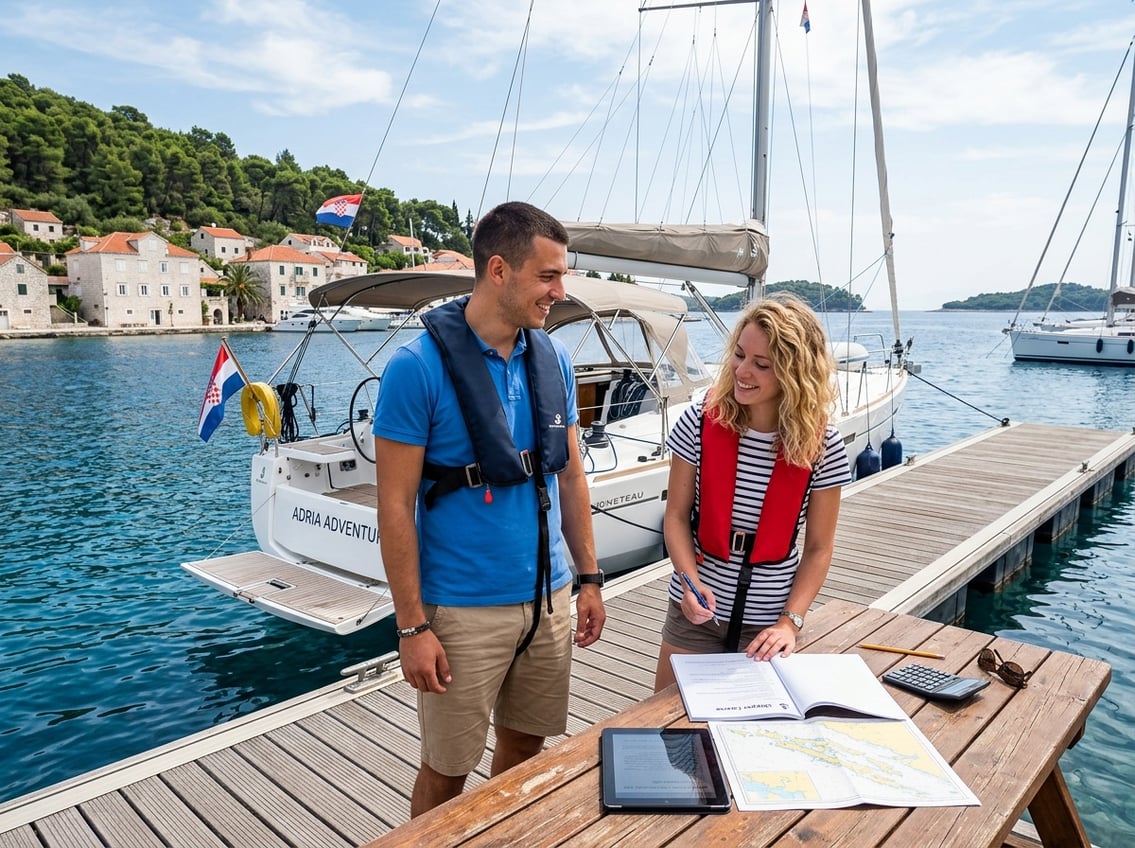
Budgeting matters, and the total outlay goes way beyond just the course fee. Exam fees, medical checks, and admin paperwork all add up.
Course Prices by Training Type
Prices depend on how deep you want to go:
| Course Type | Duration | Approximate Cost |
|---|---|---|
| Theory-only exam prep | 2–3 days | €400–€500 |
| Combined theory + practical | 5–10 days | €500–€800 |
| IYT Bareboat Skipper (sail) | 10 days | ~€1,400 |
| Professional skipper course | 10–14 days | €1,200–€2,000+ |
Location matters too. Courses in hotspots like Marina Betina or Split usually cost more. Smaller schools in quieter places sometimes offer better deals.
Exam, Medical and Administrative Costs
You’ll need to budget for a few extras. The medical exam (done by an occupational health doctor in Croatia) is required. Sometimes it’s bundled in the course; other times it’s separate (usually €50–€100).
The exam registration fee with the local Port Authority is extra. There’s also a small charge for issuing the actual licence.
All-inclusive packages that cover the medical, exam, course materials, and paperwork in one price are worth considering. They make life easier and help avoid surprise costs.
How Long the Full Process Usually Takes
From the first day of your course to holding the actual licence, most people can wrap things up in one to three weeks. The course and exam can be done in as little as 2 to 5 days if you go the theory-only route.
Admin stuff is what slows things down. The Port Authority usually takes a few business days to issue the licence after you pass. If you’re aiming for peak summer sailing, start early—don’t cut it too close.
Exams, Documents and Administrative Steps
Getting licensed in Croatia isn’t as complicated as in some countries, but you do need to pay attention to the details. The Croatian Register of Shipping and local Port Authorities handle the official side.
Where to Apply and Sit the Exam
Port Authorities in major coastal cities run the exams. Split, Zadar, Šibenik, Rijeka, and Dubrovnik all have exam centers. Most schools set up the exam for you, so you don’t have to deal with the bureaucracy alone.
Some schools let you take the exam at their location on the last day. Others might send you to the Port Authority office instead.
Documents Commonly Required
You’ll need to bring:
- A valid passport or national ID
- Medical certificate from an approved Croatian doctor
- Proof you finished the course (if it’s not the same day as the exam)
- Passport-sized photos
- The Port Authority’s application form
If you’re not from the EU, check with your school or the Port Authority for any extra requirements before you get started.
What to Expect on Exam Day
The exam has two parts. The written (theory) section covers navigation rules, maritime signals, weather basics, and safety at sea. Usually, it’s multiple-choice or short answers.
The practical part happens on a boat. You’ll show you can dock, undock, recover a man overboard, tie knots, and use navigation gear. An examiner from the Port Authority or their rep watches and scores you.
If you fail just one part, you can usually retake only that section within a certain time. No need to start over from scratch.
Rules That Matter Once You Are Licensed
Getting the licence is just the start. Croatian maritime law puts some serious responsibilities on every skipper, and you can’t plead ignorance if things go sideways.
VHF Requirements and Onboard Compliance
You need a VHF radio operator’s licence in addition to your skipper certificate. Every charter boat has a VHF radio, and you’re expected to know how to use it, especially for emergencies on Channel 16.
Charter companies always ask for both licences before handing over the keys. Sometimes, they’ll want you to show you actually know the boat’s systems too.
Limits on Vessel Type, Tonnage and Navigation Area
The Category B licence lets you skipper boats up to 30 gross tons. That’s almost every charter sailboat or catamaran in Croatia, but not the big commercial stuff.
You’re also limited to the areas listed on your licence. For Category B, that’s Croatian territorial waters and certain coastal zones. Open sea crossings? Not covered.
If you go outside your allowed area or take a bigger boat, you risk fines, losing your insurance, and even criminal charges in Croatia.
Safety Responsibilities of the Skipper
The skipper’s on the hook for everything on board—passenger safety, following the rules, and making sure all safety gear is working.
Before you set off, check that you have life jackets, flares, fire extinguishers, a first-aid kit, and working navigation lights. Croatian authorities do random checks, especially in busy spots like Split and Dubrovnik during the summer.
Keeping an eye on the weather is part of the job. You decide if it’s safe to sail—no one else gets the final say.
Choosing Training Based on Your Real Goal
Not every course fits every sailor. The right path depends on whether you just want a relaxed holiday, more confidence at the helm, or you’re eyeing a full career change.
Bareboat Holidays and Coastal Cruising
If you just want to rent a yacht and explore the Croatian islands, the Category B theory course plus exam is honestly the most straightforward way to do it.
You can wrap up the paperwork in about 2 to 5 days.
This approach actually saves money. Hiring a skipper for a week-long charter costs around €150 to €200 per day. That adds up—easily €1,000 to €1,400 per trip. Wouldn’t you rather spend that on harbor fees, seafood in Hvar, or maybe splurge on a fancier boat?
The licence works across the EU and most international waters, so you’ll get a lot more use out of it than just in Croatia.
Building Confidence on Yachts and Catamarans
Got the licence but still feel nervous about handling a 45-foot catamaran in a busy marina? You might want to look into a combined theory and practical course.
A few extra days with an instructor can really help.
Catamarans aren’t like monohulls. They're wider, they react to wind in their own way, and tight maneuvering takes a different skill set.
Some Croatian schools offer catamaran-specific training modules that focus on these exact issues.
Honestly, you build confidence by doing, not just watching YouTube videos. A few more days of guided practice in real conditions can make a world of difference.
From First Licence to Paid Skipper Work
Moving from a recreational licence to working as a paid skipper? That takes more than just enthusiasm—it means you’ll need extra training, a bunch of logged sea miles, and a higher-level certificate. In Croatia, professional skipper courses usually wrap these requirements into their programs, so you’re not left guessing what comes next.
Some academies actually team up with charter companies. After finishing a 10-to-14-day course, you might get a job offer from one of their partners in places like Split, Trogir, or Dubrovnik.
You’ll also have to pass a more detailed medical exam. Croatian maritime regulations for commercial skippers aren’t exactly loose, so you need to stay on top of compliance. It’s a bigger commitment, sure, but if you’re set on making a living on the Adriatic, investing in solid professional training seems like the only real way to start.