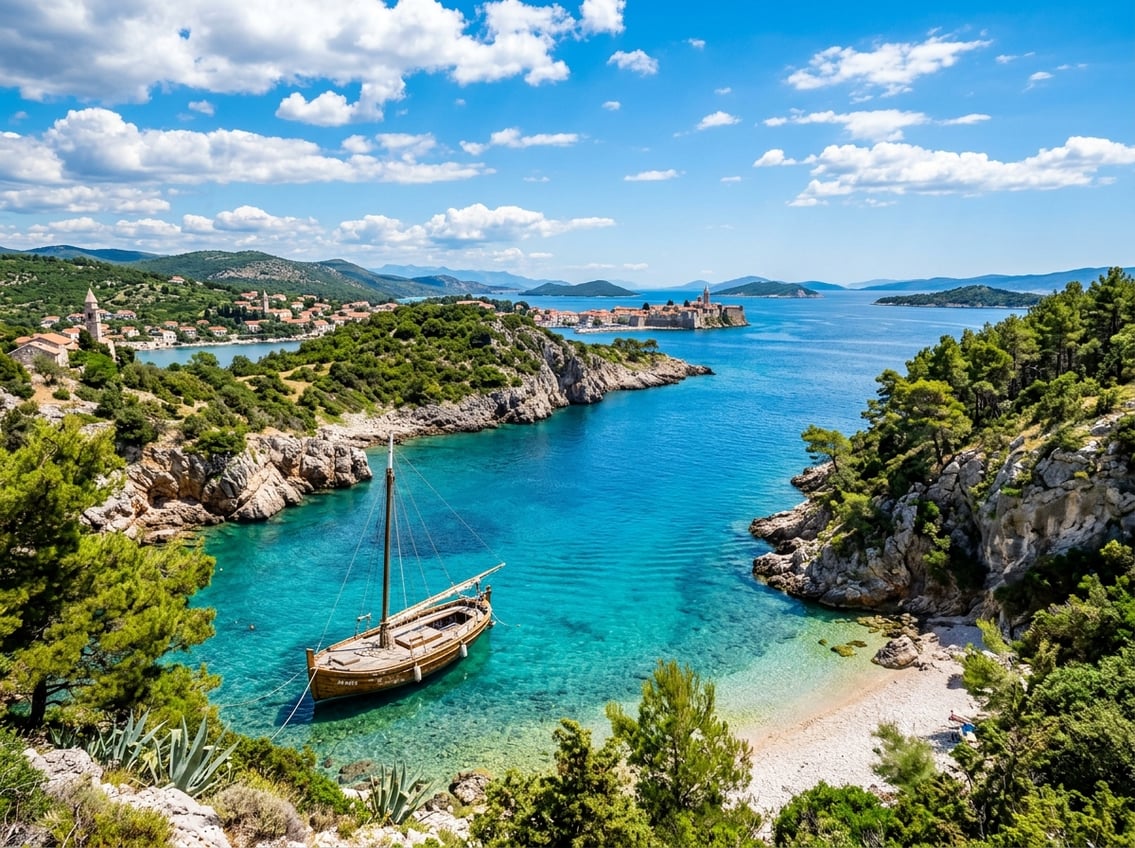
Kvarner Islands in a Day: Cres, Krk or Rab?
The Kvarner Islands are tucked into the northern Adriatic, right where the Croatian coast meets Istria. Three islands usually steal the spotlight for day trips: Krk, Cres, and Rab.
Each one brings something unique to the table. Your pick depends on what kind of day you're after.
If you've only got a day, Krk is probably your best bet. The bridge makes it a breeze to reach, and you get a quick mix of historic towns, beaches, and wine spots. Rab is the go-to for families who want sandy beaches and a medieval old town vibe. Cres is for anyone who'd rather trade crowds for wild nature and maybe spot a griffon vulture or two.
Choosing comes down to matching the island to your style. Ferries, timing, and a bit of local geography can make a big difference.
The Fast Answer: Which Island Suits Your Day Best?
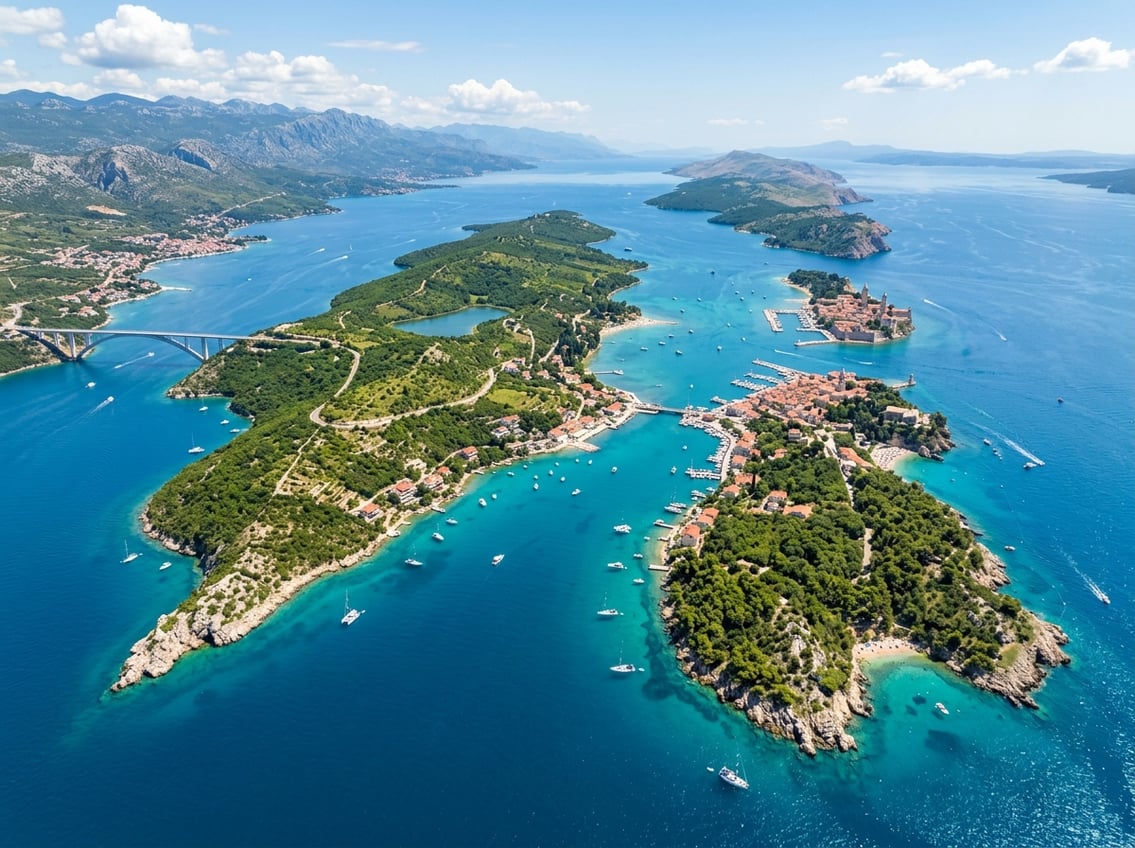
Honestly, each island fits a different mood. Krk is perfect if you're short on time. Rab rewards anyone chasing sand and old-town charm. Cres is the answer for people who want nature and don't mind a slower pace.
Choose Krk for Easiest Access and Broad Variety
The Island of Krk stands out because you can drive there—no ferry needed. That makes a huge difference for a one-day trip.
From Rijeka or Opatija, you'll get to Krk in less than an hour. Once you're on the island, you can check out a fortified old town, a cliffside wine village, and one of Croatia's most photogenic pebble beaches. It's a compact but varied route.
Choose Rab for Sand, Old Town Atmosphere, and Families
Rab is a bit of a unicorn in Croatia because it actually has sandy beaches. Most of the Adriatic is all pebbles and rocks, so families with little kids love it here.
The town itself comes with four bell towers and winding medieval streets. The old quarter feels more polished than what you'll find on Krk or Cres.
But you do need to factor in the ferry. It's not a dealbreaker, just something you have to plan around.
Choose Cres for Nature, Quiet, and Scenic Drives
Cres is the biggest and definitely the wildest of the three. Its forests, rare griffon vultures, and the hilltop village of Lubenice make it feel almost like another world.
Going to Cres means you'll slow down. The roads twist and turn, distances are longer, but if you're after peace and scenery, it's hard to beat. Some people will find that totally worth the extra effort.
Getting There Without Losing Half the Day
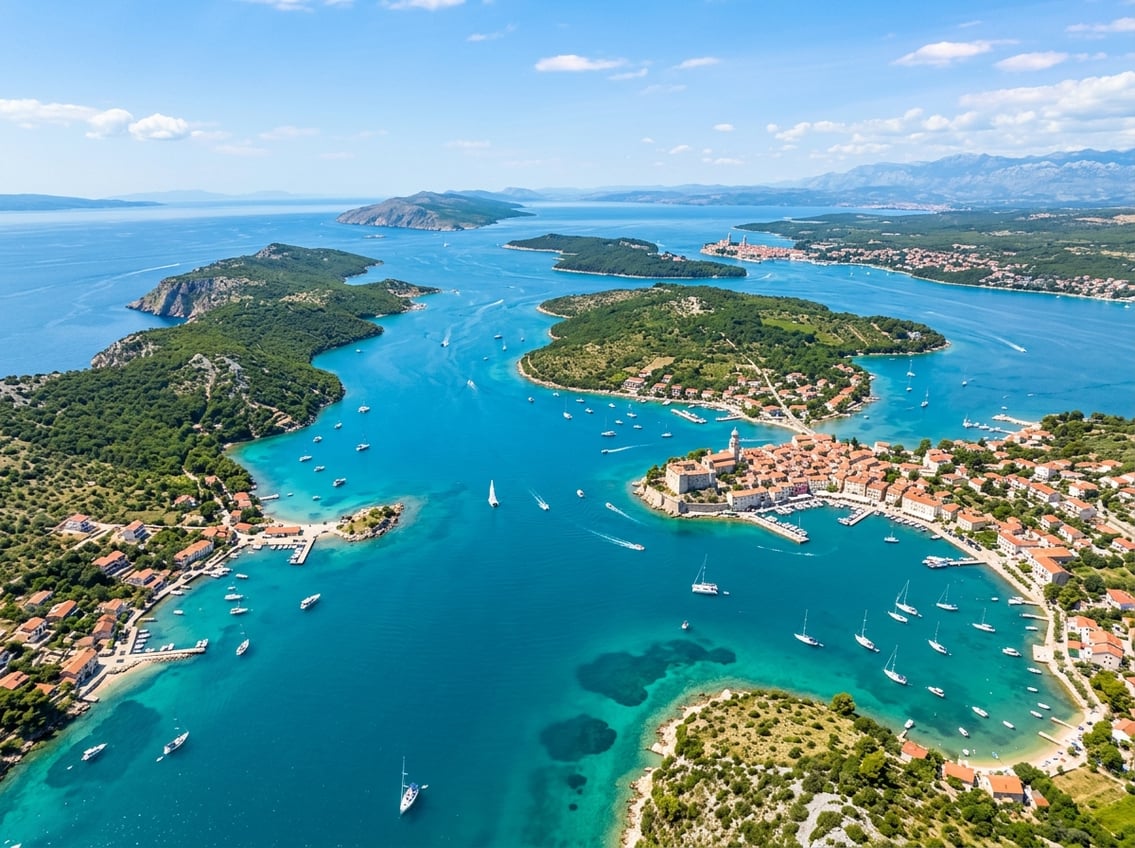
Getting around the Kvarner Gulf isn't always straightforward. Most travelers start from Rijeka or Opatija, and each island has its own quirks when it comes to getting there.
Krk Bridge and Road Access From Rijeka and Opatija
The Krk Bridge connects the mainland to Krk's northeastern tip. You don't pay a toll anymore (they scrapped it in 2020), and the drive from Rijeka takes about 30 to 40 minutes, depending on traffic.
Coming from Opatija, you'll drive east to Rijeka and then south over the bridge. Figure on 50 to 60 minutes total. No reservations, no timetables. That's a big plus if you want to keep things flexible.
Ferry Routes via Brestova, Merag, and Valbiska
If you're heading to Cres with a car, you'll usually take the Jadrolinija ferry from Brestova (Istrian coast) to Merag on Cres. The ferry ride itself is only about 20 minutes, but getting to Brestova from Rijeka takes around an hour. In summer, waiting in line can easily add another half hour or more.
For Rab, you'll likely drive across Krk to Valbiska and catch the ferry to Lopar on Rab. That ferry takes about 90 minutes. There's also a seasonal catamaran from Rijeka, which is faster but doesn't take cars.
Jadrolinija Schedules, Car Logistics, and Seasonal Delays
Jadrolinija runs most of the ferries around here. From June through September, departures are frequent—maybe every hour or two on the busiest routes. Outside of summer, sailings drop off a lot. Sometimes you'll only get a few per day.
A couple of quick tips:
- Get there at least 45 minutes early in July and August. Summer weekends can be brutal for lines, especially at Brestova and Valbiska.
- One-way car ferry tickets from Brestova to Merag cost about €4–€5 per person, plus €20–€25 for a regular car. Prices jump a bit in peak season.
- Check the return times before you leave. Missing the last ferry means you're staying overnight, whether you planned to or not.
The Jadrolinija website and app are helpful, but cell service on parts of Cres can be patchy. Download the schedule ahead of time if you're worried.
Krk: The Most Efficient One-Day Choice
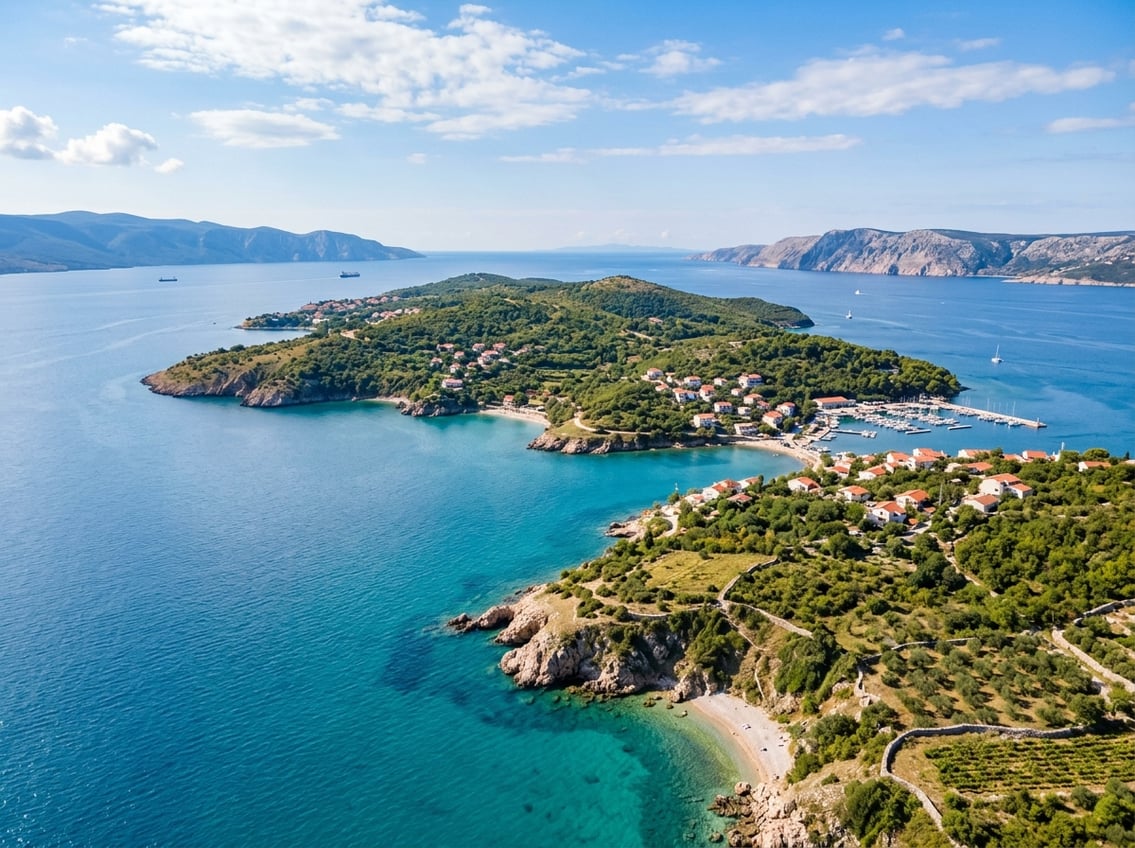
Krk really does make day-tripping easy. You've got the bridge, short drives, and a good mix of culture, food, and beaches. Krk Town, Vrbnik, and Baška are all close enough to squeeze into a single day without feeling rushed.
What to See in Krk Town in a Few Hours
Krk Town hugs the island's southwestern coast and acts as its cultural heart. The old town is compact—you can walk it in an hour or two—but there's plenty to see.
Frankopan Castle looks out over the harbor, and its round tower dates back to the 1200s. You get a great view from the top. The Cathedral of the Assumption is just steps away, and its roots go back to the 5th century.
Wandering the narrow stone streets, you'll find cafes, shops, and gelato stands. Spending a morning here, maybe with a coffee by the water, is a pretty good way to start the day. Two or three hours is usually enough.
Baška, Vrbnik, and the Island's Contrasting Landscapes
Head south from Krk Town and the scenery shifts fast. The road to Baška winds through rocky hills before dropping into a valley by the sea. Vela Plaža is Baška's big draw—a long pebble beach with clear water and a dramatic mountain backdrop.
Vrbnik is totally different. This tiny village sits on a cliff 50 meters up, overlooking the coast. It's famous for Žlahtina, a crisp white wine that's only made here. You can grab a glass in a tasting room for a few euros and take in the view.
Vrbnik's streets are famously narrow—one alley is just 43 centimeters wide. The drive from Krk Town to Vrbnik takes about 15 minutes, and from Vrbnik to Baška, it's another 25. You can do the loop either way.
When Krk Is the Right Pick for First-Time Visitors
If it's your first time in the Kvarner Islands, Krk is the obvious choice. No ferries to worry about, and you won't lose time to travel delays.
Krk also works for anyone who wants a little bit of everything. You can fit in some history, hit the beach, and try local wine—all in one day. It's good for families, couples, or solo travelers.
Rab: Best for Sand and a Strong Old-Town Experience
Rab stands out in Croatia for two reasons: real sandy beaches and an old town that feels genuinely historic. It's in the Kvarner Bay between Krk and Pag, and while getting there takes a little more effort, the vibe is different from the other islands.
Why Rab Town Feels Different From the Other Two
Rab Town sits on a slim peninsula on the island's southwest side. Four medieval bell towers rise above the rooftops, giving it a skyline you'll recognize right away.
Walking the main street, Gornja Ulica, feels like time travel—Romanesque and Gothic buildings are everywhere. The town is small, so you can wander through its churches, old walls, and gardens in about two hours.
Restaurants along the harbor serve fresh seafood, and in late July, the Rabska Fjera festival brings the streets to life with costumes, crossbow tournaments, and old-school crafts.
Rab Town feels more cohesive and preserved than Krk or Cres. It's actually smaller than it looks in photos, but that kind of adds to the charm.
Paradise Beach, Rajska Plaža, and the Lopar Advantage
You'll find sandy beaches on the Lopar peninsula, right at Rab's northern tip. Paradise Beach (Rajska Plaža) is the showstopper: a shallow, sandy stretch that runs almost two kilometers, and the water's warm enough that even little kids can splash around without turning blue.
Most Croatian beaches? Pebble or rock. Rab's sandy spots make it stand out in the northern Adriatic. Besides Paradise Beach, Lopar hides around 20 smaller sandy coves along its coastline. Some are only reachable by foot or boat, so they stay pretty quiet, even in August.
But Lopar isn't exactly close to Rab Town. They're on opposite ends of the island, so expect about a 25-minute drive between them. If you want to see both in a day, you'll have to plan carefully.
Who Should Prioritize Rab for a Day Trip
Rab works best for families with small children who want sandy, shallow water. It's also a solid pick for travelers who love old-town vibes and don't mind spending extra time on ferries.
If you hate feeling rushed, Rab might not be for you. The ferry from Valbiska on Krk to Lopar takes about 90 minutes. So, a Rab day trip from Rijeka means you're looking at nearly three hours each way, including driving and ferry. It's tight, but if you catch the first ferry, you can make it work.
Cres: The Strongest Option for Nature and Solitude
Cres is technically the largest island in the Adriatic (though Krk fans might argue). It gets way fewer visitors than you'd expect. Its northern half is covered in dense forest, the coastline is wild and mostly untouched, and the interior just feels remote in a way Krk and Rab can't really match.
Cres Town, Lubenice, and the Appeal of a Wilder Island
Cres Town is a tiny Venetian-style harbor on the west coast. Pastel buildings line the waterfront, and a few restaurants serve up fresh seafood right at the marina. It's charming, but honestly, the town isn't the main reason people come here. It's more of a jumping-off point.
The real draw is Lubenice, a hilltop village about 25 kilometers south of Cres Town. Only a handful of people live there year-round. The village perches on a cliff, about 380 meters above the sea, and looks out over a white pebble beach that's often called one of Croatia's most beautiful. Getting there means a steep 45-minute hike down—and, yeah, a tougher slog back up. It's not for everyone.
Driving from Cres Town to Lubenice takes about 30 minutes along twisty, narrow roads. Parking's limited at the top. Still, that's part of the appeal. On a weekday in June, you might even have the beach to yourself.
Beli Visitor Centre and the Griffon Vultures
Up north, Cres is home to a population of griffon vultures, which is pretty rare in Europe these days. The Beli Visitor Centre in the village of Beli runs a rescue and rehab program for injured birds.
You can tour the center, learn about the vultures, and, if you're lucky, spot some gliding above the cliffs. These birds have wingspans over 2.5 meters. Watching one soar close by is something you won't forget.
Beli itself is tiny and ancient, surrounded by Mediterranean scrub and oak forest. Hiking trails start from the village and head into the Tramuntana region, the thickly wooded northern part of the island. These paths wind through old forests and give you views of the neighboring island, Plavnik.
When Cres Is Worth the Longer, Slower Day
Cres tests your patience. The ferry from Brestova to Merag adds time, the roads are slower, and everything's spaced out more than on Krk or Rab.
Go for Cres if you value nature over nightlife, prefer hiking to a hidden beach over sharing one with a crowd, or think endangered vultures are more interesting than a medieval street fair. If you're already in Istria, it's also the easiest island to reach, since Brestova ferry port is close to places like Pula or Labin.
A realistic day on Cres means seeing Cres Town, picking either Lubenice or Beli (both in one day is a stretch), and taking a scenic drive through the island's wild interior. That's a full day, but a rewarding one.
How Nearby Islands Change the Decision
Kvarner Bay isn't just about these three islands. Several nearby islands can make a day trip more interesting (or complicated), depending on your ambition and schedule. Some pair naturally with Krk, Cres, or Rab. Others? They fit better into a different kind of trip.
Lošinj as a Cres Extension via Osor
Cres and Lošinj connect by a small swing bridge at Osor. So, if you're driving on Cres, you can just keep going south onto Lošinj—no extra ferry needed. The bridge opens on a schedule for boats, which can mean a short wait, but otherwise, it's an easy crossing.
Mali Lošinj is the main town, and its harbor is honestly one of the prettiest in the Adriatic. The Museum of Apoxyomenos is worth a look—it houses a Greek bronze statue pulled from the sea in 1999. Veli Lošinj is nearby and quieter, with a lush, almost tropical vibe thanks to its microclimate. Lošinj likes to call itself the "Island of Vitality" because of its air quality, a claim dating back to old Austrian wellness tourism days.
Doing both Cres and Lošinj in one day is possible but really ambitious. The drive from Merag (Cres ferry port) to Mali Lošinj takes about 90 minutes each way. That doesn't leave much time for exploring unless you start at sunrise.
Smaller Islands Such as Ilovik, Susak, and Goli Otok
Several tiny islands are reachable by boat from Lošinj or Rab, each with its own twist.
Ilovik is car-free, covered in flowers, and home to fewer than 100 people. Susak is even weirder—the ground is sand and clay, not the usual limestone, so it feels almost otherworldly. You can visit both by small boat from Mali Lošinj, but honestly, they're better if you can stay overnight.
Goli Otok, off Rab's northeast coast, has a rough past. It was a political prison during Yugoslav times (1949 to 1989). Now it's empty, and boat tours from Rab let you wander through the old prison ruins. It's a sobering half-day trip that goes well with a Rab visit, though you'll have to skip the beach or old town to fit it in.
Why Pag, Vis, Hvar, Brač, and Korčula Belong to a Different Plan
If you're poking around for Croatian islands, you'll keep running into names like Hvar, Vis, Brač, and Korčula. These are all Dalmatian islands, sitting way down south near Split. They really aren't tied to any day trip from Kvarner.
Pag is kind of an outlier. Its northern tip is technically in the Kvarner region, and you can get there by bridge from the mainland near Zadar.
Still, Pag's best-known spots—like Zrće party beach, that famous Pag cheese, and the wild moonscape terrain—are all in the central and southern parts. Getting to them from Rijeka or Opatija takes ages.
So, if you're starting out from the Kvarner Bay area, it just makes sense to focus on Krk, Cres, Rab, or maybe Lošinj. Dalmatian islands? You're better off planning a separate trip, probably from Split or Dubrovnik, and sorting out ferry schedules from there.