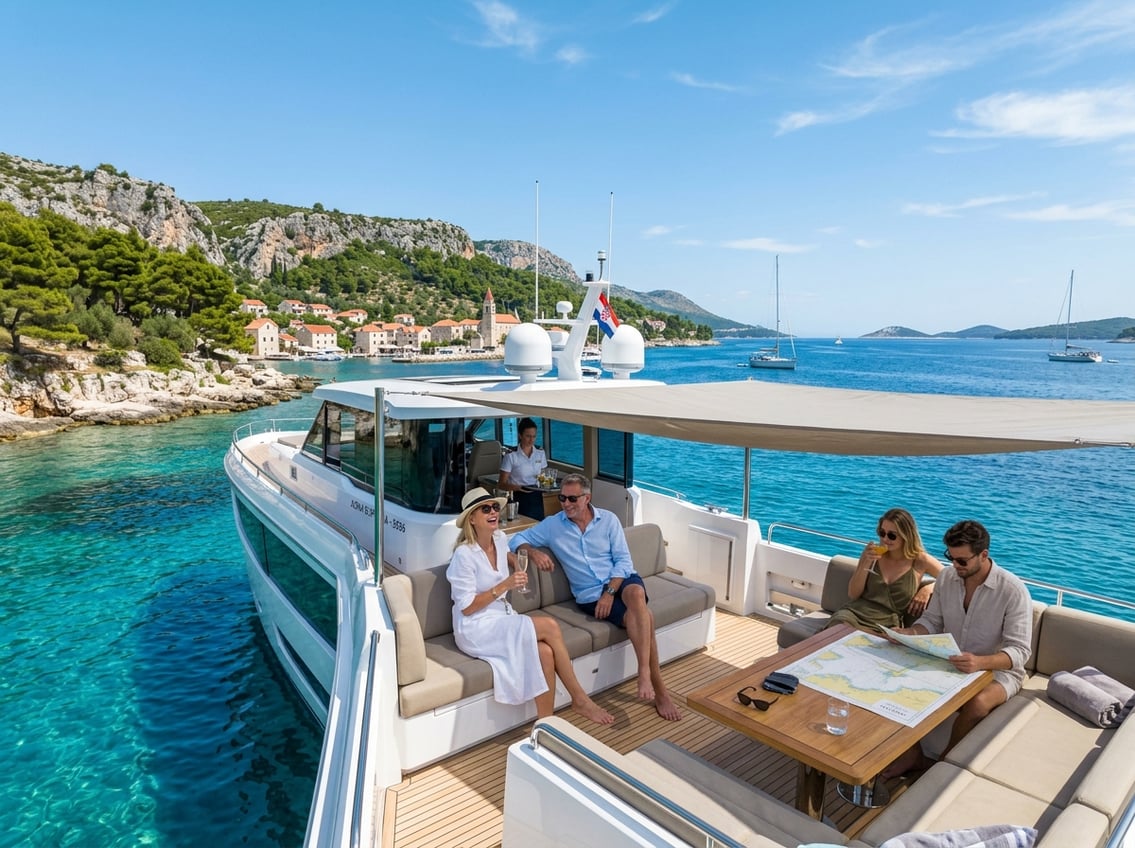
Croatia Charter Prices in 2026: Real Cost Breakdown
Croatia charter prices in 2026? Well, they're all over the place. That first quote you see? It's rarely the whole story. Most folks eyeing a yacht charter in Croatia spot a base rate and figure, "That's it, right?" Nope.
A Croatia yacht charter in 2026 usually costs 30–40% more than the advertised base rate. The base fee covers the yacht rental and crew salaries, but fuel, marina fees, food, drinks, and the Advance Provisioning Allowance (APA) come separately. A €20,000 base charter often turns into a €28,000–€30,000 trip after all the extras.
That price gap surprises a lot of first-timers. If you know where every euro goes, you can avoid getting burned.
What the Advertised Charter Price Usually Includes
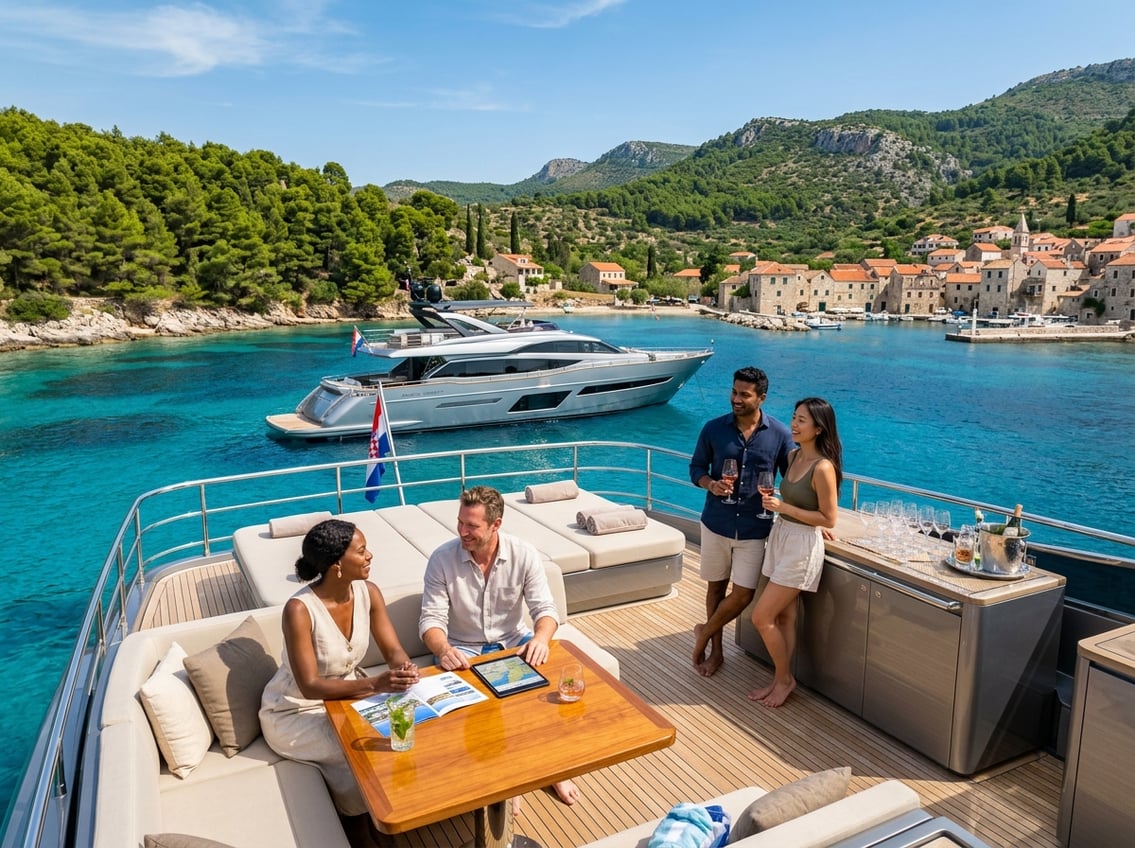
Charter quotes center around a base rate, but that only covers part of your adventure. What’s included—and what’s not—totally depends on whether you book a bareboat charter, a skippered option, or go all-in on a fully crewed yacht. If you figure this out early, you’ll save yourself a headache.
Base Rate Versus Total Trip Cost
The base rate is just the price for renting the yacht itself, usually for a week. It covers the boat, basic insurance, standard onboard equipment, linens, towels, and safety gear.
That base rate typically makes up 60–70% of your total trip cost. The rest—fuel, food, marina fees, and other random charges—show up later.
It’s a bit like booking a hotel room. The rate gets you in the door, but meals, parking, and odd little fees pop up quickly.
What Is Included on Bareboat, Skippered, and Crewed Bookings
A bareboat charter is as basic as it gets. You get the yacht—no captain, no cook, no groceries. Cheapest option, but you handle everything, from steering to shopping.
A skippered charter adds a professional captain. Sometimes the skipper’s fee is baked into the base rate, sometimes it’s extra (usually €150–€200 per day in Croatia).
A crewed yacht charter or luxury booking comes with a team: captain, chef, stewardess, maybe a deckhand. Crew salaries are in the base rate, but guest meals and drinks? Those usually run through the APA, not the charter fee.
Why a Charter Quote Can Look Lower Than the Final Invoice
Charter companies love to show off a low base rate—it looks good. But mandatory extras like cleaning fees, transit logs, check-in/check-out charges, and tourist taxes aren’t in that first quote.
Some companies bundle these extras, others list them one by one. A private yacht charter that starts at €15,000 can quietly climb to €18,000–€20,000 once you add all the must-haves. Always, always ask for a full breakdown before signing.
The Main Extras That Change Your Final Spend

Three main extras swallow up most of the difference between the quote and the final bill: the Advance Provisioning Allowance, fuel and marina fees, and onboard consumables. These scale up with the size of the yacht, the length of your trip, and how much you want to eat and drink.
Advance Provisioning Allowance and How It Works
The APA is a deposit you pay before your trip. It covers all running expenses: fuel, food, drinks, port fees, and special requests. On crewed yacht charters, the APA usually runs 25–35% of the base charter fee.
So, a €30,000 charter means an APA of about €7,500–€10,500. The crew manages this fund and tracks spending. If there’s money left, you get it back. If you go over, you pay the difference.
Bareboat charters don’t have a formal APA. You just pay for fuel, food, and marina fees as you go.
Fuel, Docking, and Marina Fees
Fuel is the biggest wild card. A sailing yacht sips fuel compared to a motor yacht, but even a catamaran will burn through €500–€1,500 in a week, depending on your route.
Motor yachts? That’s a whole other deal. A 60- to 80-foot motor yacht cruising the Adriatic Sea can eat up €3,000–€8,000 in fuel in just a week.
Marina fees in Croatia range from €50–€80 per night at smaller harbors to €200–€400 at hot spots like Hvar or Dubrovnik. Anchoring in public bays costs nothing, and plenty of savvy charterers mix anchorages and marinas to keep costs down.
Food, Drinks, Cleaning, and Optional Add-Ons
On crewed charters, food and drinks come out of the APA. Expect €150–€300 per person per day for luxury-level dining, including wine and cocktails.
Bareboat charterers shop for their own groceries. Supermarkets in Split, Trogir, and other charter bases are a lot cheaper than island shops, so stocking up before you leave makes sense.
Obligatory extras like final cleaning (€150–€350), bed linen sets, and check-in fees hit almost every booking. Optional stuff—paddleboards, jet skis, dive gear—costs extra. These little charges pile up fast.
Price Ranges by Yacht Type and Level of Service
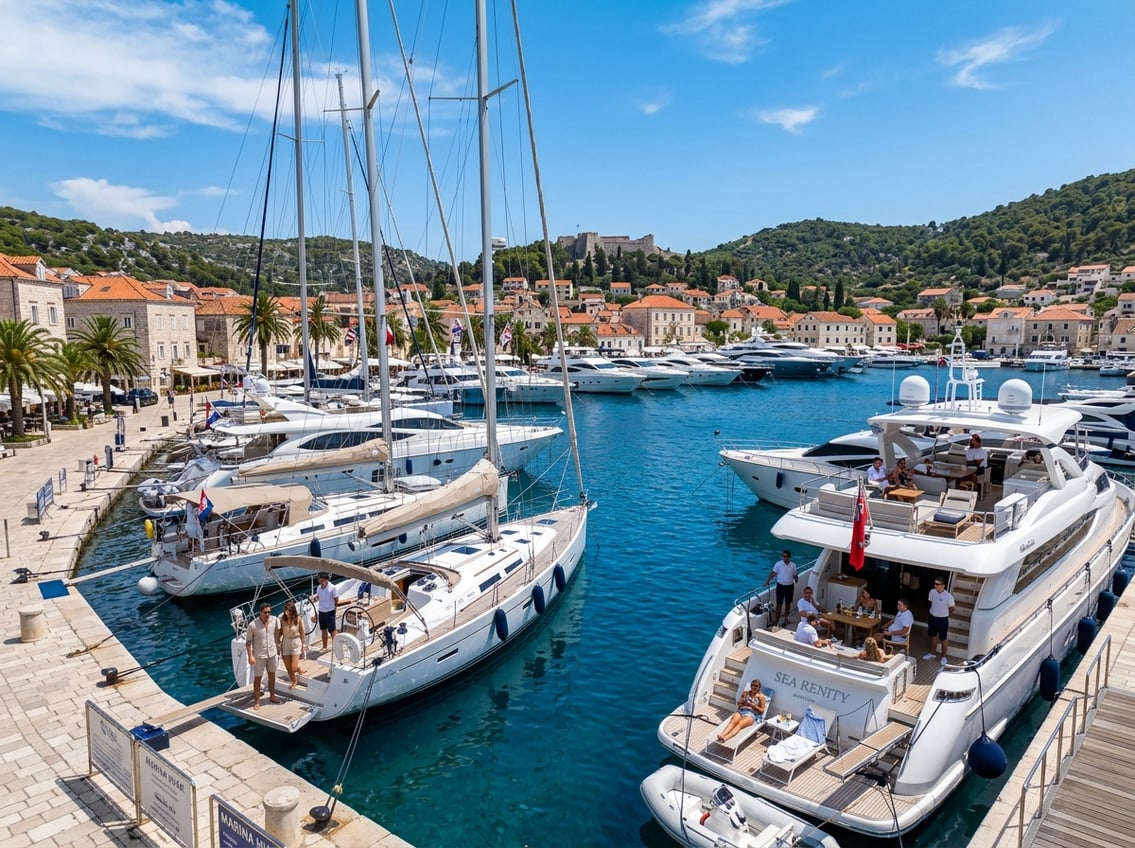
Yacht charter prices in Croatia go from a few hundred euros a week for a basic sailboat to six figures for a superyacht. The type of boat and the level of service decide where you land on that spectrum.
Sailing Yachts and Catamarans
Sailing yachts are the entry point. A 35- to 45-foot monohull in 2026 costs about €600–€5,000 per week bareboat, depending on age, condition, and season.
Catamarans cost more but give you more space and stability. A 40- to 50-foot catamaran runs €1,500–€15,000 per week bareboat. Newer models from Lagoon or Fountaine Pajot sit at the high end.
For families or groups of friends, catamarans often make the most sense. More living space, shallow draft—lets you get into anchorages monohulls can’t reach.
Motor Yachts, Gulets, and Premium Options
Motor yachts under 60 feet start at about €1,000 per week for older boats and go up to €25,000+ for newer, flashier ones. The 60- to 80-foot range, which is prime territory for a private yacht with crew, runs €25,000–€50,000 per week in peak season.
Gulets—those classic wooden motor-sailors—are in a similar ballpark. A premium private gulet charter in 2026 costs €19,000–€25,000 per week for the yacht, crew, and core services.
Superyachts over 80 feet start at €50,000 weekly and can top €150,000 for the best of the best.
When a Luxury Booking Represents Better Value Than Expected
A crewed yacht charter at €35,000 per week sounds wild until you break it down. Split among 8 guests, that's about €4,375 each for seven nights—private chef, captain, all meals, and a floating hotel that actually moves.
Compare that to a week at a fancy Adriatic resort. Rooms alone can run €400–€600 per night per couple. Suddenly, the charter starts looking like a pretty solid deal, especially for groups of 6–10.
How Season, Route, and Charter Base Affect Cost
Timing and geography shape the final price almost as much as the yacht itself. The same catamaran might cost nearly double in August compared to late September. Even your starting base changes the base rate and running costs.
Peak Summer Versus Shoulder Season
July and August are peak season. Prices hit 100% of their list rate, availability is tight, and most companies want a minimum seven-day booking. If you want a premium yacht in these months, you’ll need to book 8–12 months out.
Shoulder season—May, June, September, early October—drops rates to 70–85% of peak. September is the sweet spot: warm water, fewer crowds, more anchorages, and you can save 15–25% compared to July.
Low season (April and November) slashes rates to 50–60% of peak, but weather is dicey and some shore spots close. It’s best for seasoned sailors who can roll with changes.
Split to Dubrovnik and Other Common Cost Patterns
The Split to Dubrovnik route is a classic. It’s about 120 nautical miles and hits famous spots like Hvar, Korčula, and Mljet.
But here’s the catch: it’s a one-way trip. The yacht has to get back home, and that repositioning fee is €2,000–€5,000 depending on the boat. If you do a round-trip from the same base, you skip this charge.
Charters from Split are usually 5–10% cheaper than Dubrovnik, thanks to lower marina fees and a bigger fleet. Dubrovnik charges a premium—lots of demand, fewer berths.
How Distance, Anchorages, and Port Choice Shift the Budget
Shorter routes between the Dalmatian Islands burn less fuel and let you linger at each stop. Island-hopping around the Kornati archipelago from Šibenik or Zadar covers less ground and saves on fuel compared to the long Split-to-Dubrovnik run.
Anchoring in public bays is free along most of the Croatian coast. Some of the best swimming and snorkeling is at anchor, not in marinas. Mixing marina nights with anchorages can chop marina fees in half.
Port choice matters. A night in a small harbor like Palmižana is way cheaper than the main Hvar Town marina. If you plan your itinerary with costs in mind, you can hit all the best spots without blowing the budget.
Choosing the Right Format for Your Budget
The charter format—bareboat, skippered, or fully crewed—really shapes how much you’ll spend. If you pick the wrong one, you might blow your budget or end up with a trip that doesn’t deliver what you hoped.
When Bareboat Is the Lowest-Cost Option
Bareboat charters are usually the cheapest way to get on the water in Croatia. You rent the yacht, and you’re in charge of everything: sailing, cooking, shopping, docking, the whole deal.
If someone in your group has a skipper’s license (ICC or similar, since Croatia requires it), you’ll keep your Croatia yacht charter cost as low as possible. For example, a group of six on a 42-foot catamaran in June might pay €4,000–€6,000 for the boat, then another €1,500–€2,500 for running costs that week.
But there’s a catch. Someone has to actually steer the boat. Someone needs to cook and keep the supplies in order. It’s not really a break for everyone if a couple people are doing all the heavy lifting.
When a Crewed Yacht Charter Makes More Sense
Crewed yacht charters cost more upfront, but you won’t have to lift a finger. No cooking, no worrying about navigation, no stress about docking.
If nobody in your group has a sailing license, honestly, crewed is the only real option. It’s also a better fit for celebrations, milestone birthdays, or any trip where everyone wants to just relax and not worry about anything.
Once you add up the costs of provisioning, hiring a skipper, and eating out every night, the price gap between bareboat and crewed isn’t always as huge as it seems. A crewed charter just wraps everything into one clear price.
Questions to Ask Before You Accept a Quote
Before you sign anything, ask these questions to avoid blowing your budget:
- What’s included in the base rate? Get a detailed list—don’t assume.
- What’s the estimated APA, and what does it cover? Make sure fuel, food, and marina fees are in there.
- Are there mandatory extras? Final cleaning, linen, transit log fees, tourist taxes—get it all in writing.
- Is the route one-way or round-trip? One-way trips often mean extra fees.
- What happens if the APA runs out? Know how to top it up if needed.
Getting clear answers in writing keeps most nasty surprises away, especially if you haven’t chartered before.
Common Budget Mistakes and How to Avoid Them
Even folks who travel a lot make expensive mistakes when booking a yacht charter in Croatia. Most slip-ups happen because people assume things, not because they didn’t do their homework. If you know the three big ones, you’ll probably avoid them.
Underestimating Running Costs
A lot of people think the base rate is the whole budget. If you book a €12,000 bareboat and only plan for €12,000, you’ll be in trouble by midweek.
Fuel, marina fees, groceries, restaurant meals, and the advance provisioning allowance (on crewed charters) usually add 30–40% to the base price. A smart budget multiplies the base rate by 1.35 to 1.4 for the real cost. So that €12,000 bareboat is actually a €16,000–€17,000 trip once you include everything.
Booking the Wrong Yacht for the Route
Big motor yachts work for short, marina-heavy trips around the Dalmatian Islands. They’re not a great fit for long routes through remote anchorages where fuel stops are rare and marinas can’t handle a 70-footer.
You want the yacht to match your plan. Catamarans are great for shallow anchorages and moderate distances. Motor yachts are better for short, direct routes. Sailing yachts are perfect if you want to feel the wind and save on fuel.
Pick a yacht that’s too big, and you’ll pay more for fuel, marinas, and crew. Pick one that’s too small, and you’ll all be bumping elbows for a week.
Failing to Compare Like-for-Like Offers
Charter quotes from different companies almost never cover the same things. One company might include cleaning, linen, and a skipper in the base price. Another might show a lower base rate but then tack on €2,000 in mandatory extras.
If you want to know what you’re actually paying, you really have to ask for a full cost breakdown from each company. Only then can you put the totals side by side and see what’s going on. Just comparing the base rates? That’s a quick way to get surprised by the final invoice.
It’s worth insisting on an “all-in” estimate from each company. Make sure it covers everything—APA, all required fees, and what they expect for fuel. That’s the only way to see the real price differences. Otherwise, you’re just guessing.