Boating in Croatia without a licence - All you need to know
So, can you actually go boating in Croatia without a licence in 2026? Turns out, yes—at least in some cases. Croatia's coastline is wild, with more than a thousand islands, so it's no wonder people want to rent a boat and just wander.
Here's the deal: You're allowed to operate a small boat without a licence if the engine is under 5 kW (about 6.8 HP) and the boat itself is less than 5 meters long. Anything bigger or faster? That's when you'll need a skipper's certificate and, often, a VHF radio licence too. If you don't have those, you can still rent a boat with a skipper or crew, starting at about €150 a day.
The details get weird depending on the boat, the charter type, and whether Croatia recognizes your paperwork. Booking platforms rarely mention the fine print.
When You Can Legally Go Without a Licence
Croatian maritime law actually lets you use certain boats without a licence, but the rules are strict. Rental companies sometimes add their own restrictions, which can catch you off guard.
The Basic Rule for Small Boats and Low-Power Engines
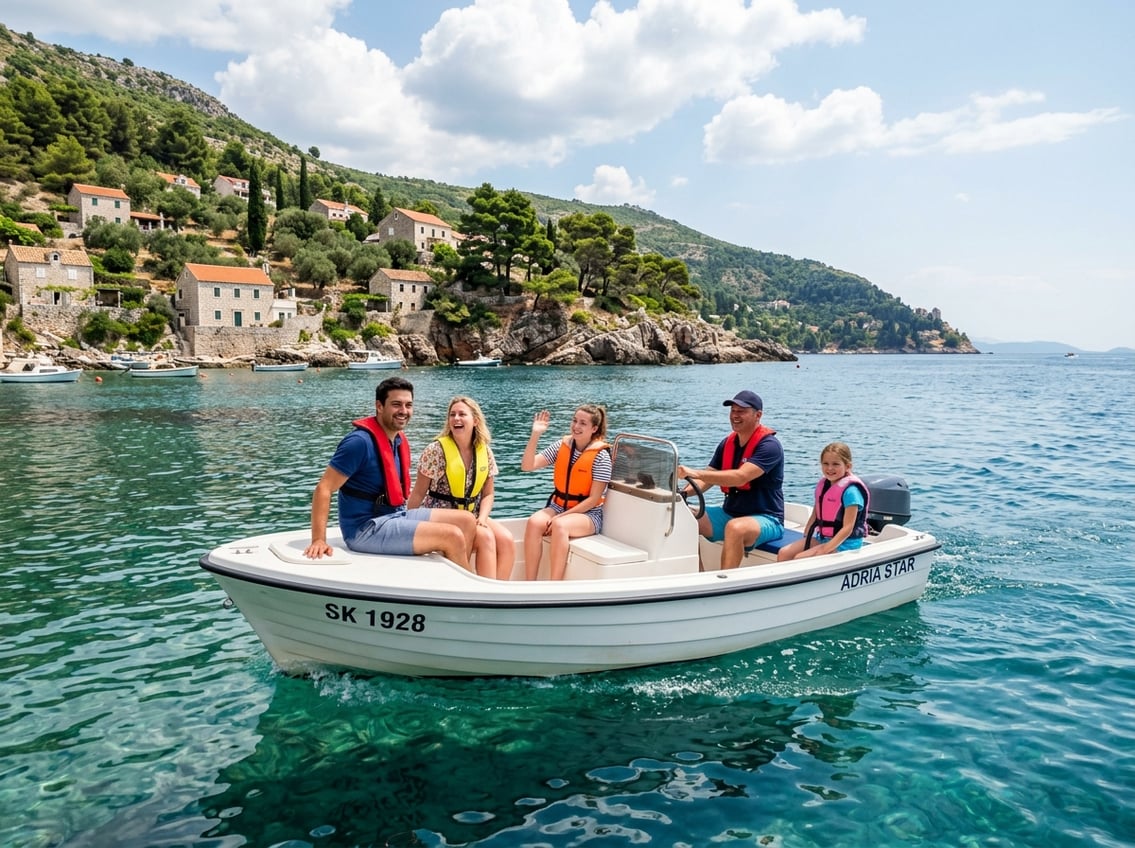
If your boat is under 5 meters and the engine is less than 5 kW (about 6.8 HP), you don't need a licence. That covers lots of little dinghies, some small electric boats, and those low-powered inflatables you see at the beach.
Croatian law treats these vessels differently. They're not in the same league as bigger yachts or fast motorboats. The thinking is that small, slow boats are less risky, especially close to shore.
When Rental Companies Make Up Their Own Minds
Here's where people get tripped up. Even if the law says you're fine, rental companies can set their own requirements. Some just want to see your ID and a signed liability waiver. Others want proof you've actually driven a boat before, or they might not rent to anyone under 21.
A few rental outfits insist on a licence no matter what. That's usually about their insurance. So, always check with the company before you show up, or you might be stuck on the dock.
No Licence Doesn't Mean No Rules
Just because you don't need a licence doesn't mean you can ignore the rules. You still have to follow navigation laws, obey speed limits in ports, and respect right-of-way. Croatian maritime police do patrol, especially during summer near the busy islands.
If you mess up and cause an accident, not having a licence won't save you. Fines start at about €130 and can get ugly if there's damage or injury. Life jackets, safety gear, and sticking to designated zones? Yeah, you can't skip that stuff.
The Point Where a Licence Becomes Mandatory
Once the boat is bigger or the engine is stronger than those limits, you hit a wall. Croatian rules get a lot more serious about paperwork.
Engine Power, Boat Size, and Charter Category
If the engine is 5 kW or more, or the boat is over 5 meters, you'll need a skipper's licence. Same goes for any sailboat you want to charter bareboat.
Charters fall into two buckets: bareboat (you're the skipper) or skippered/crewed (someone else is in charge). Whoever's officially running the boat needs the right licence.
Most rental yachts in Croatia are between 9 and 15 meters. You can't take those out without paperwork.
Bareboat Charter Means You're the Boss
When you rent bareboat, you're not just driving—you're the legal skipper. That means you're responsible for everything: the crew, the route, the weather calls, and talking to port authorities.
Croatian ports require you to show both a navigation licence and a VHF radio certificate. No licence, no boat. Rental companies have to check these before you get the keys.
The VHF Radio Requirement
Most charter boats over 5 meters have a VHF marine radio. If your boat has one, you need a VHF radio operator's licence. This is separate from your skipper's licence.
The Short Range Certificate (SRC) is the usual one. Without it, you can't legally use the boat's radio. Some charter bases have actually turned people away just for forgetting this certificate, even if they had the skipper's licence.
Which Certificates Croatia Commonly Recognizes
Croatia does accept a bunch of foreign boating licences, but not all. You really need to check if yours is on the approved list and bring any extra documents they might ask for.
ICC and the International Certificate of Competence
The International Certificate of Competence (ICC) is the most widely accepted licence for Croatian charters. It's issued under a UN agreement and works in most of the Mediterranean.
If you're American, here's the annoying bit: the US doesn't hand out ICCs. Americans usually get one through the Royal Yachting Association (RYA) or a similar group, which means a practical test. Don't leave this for the last minute—it can take time to arrange.
RYA Day Skipper and UK Licences
The RYA Day Skipper certificate (practical and theory) is good in Croatia, as are RYA Coastal Skipper and Yachtmaster. These are well-known, and most charter companies recognize them.
If you did your RYA training in the UK, Gibraltar, or at any RYA-approved school, you should be fine. Bring the original certificate—not a copy. Some charter bases have refused to accept photocopies.
Sportbootführerschein See and Other European Licences
Germans, you're in luck: the Sportbootführerschein See (SBF See) is valid for Croatian coastal waters. Austrian, Italian, Czech, and Polish boating licences are usually accepted too, but details can change.
A few quick notes for European licence holders:
- Your licence must be valid for coastal/sea navigation (not just rivers or lakes)
- Some Austrian club licences don't count
- If your licence isn't in English, German, or Italian, you might need a certified translation
Double-Check Before You Go
Don't just assume your licence will work. Contact your charter company at least a month before your trip and ask if your certificate is accepted.
Always bring original documents—your skipper's licence, VHF radio certificate, passport or ID. Some bases also want a crew list and proof of experience (a logbook helps). If you're unsure, get an ICC as a backup.
If You Do Not Qualify to Skipper the Boat Yourself
No licence? You're not out of luck—you just need to pick a different kind of boat rental.
Skippered Trips: The Easiest Fix
The simplest way to go is a skippered boat rental. The skipper comes with the boat, handles navigation, and takes legal responsibility. You just show up, tell them where you want to go, and enjoy the ride.
Skippered trips from places like Hvar, Split, or Zadar usually run €250–€600 per day, depending on the boat and season. Sometimes the skipper's fee is included, sometimes it's an extra €120–€180 per day. Always ask before booking.
When a Crewed Charter Makes Sense
A crewed charter means you get a skipper plus a hostess or cook. For bigger groups or week-long trips, this is often the better option.
It costs more—usually €3,000–€8,000 per week for a crewed yacht or catamaran. But you get meals, local tips, route planning, and someone else deals with anchoring.
Families with kids often pick crewed charters for the extra help. If nobody in your group has real boating experience, it's probably the way to go.
Picking What's Right for You
| Scenario | Best Option | Typical Cost Range (2026) |
|---|---|---|
| Solo or couple, short trip, calm waters | Licence-free small boat rental | €80–€150/day |
| Family day trip, 4–6 people | Skippered motorboat | €300–€600/day |
| Group of friends, week-long island hopping | Crewed yacht charter | €3,000–€8,000/week |
| Experienced sailor with valid ICC + VHF | Bareboat charter | €1,500–€5,000/week |
It really depends on your group, experience, and how long you want to be on the water. A quick spin around Hvar is a different animal than a week-long Split-to-Dubrovnik journey.
Documents, Check-In, and Inspection Risks
Paperwork isn't glamorous, but missing something can ruin your trip before it starts.
You Need Originals—No Exceptions
Anyone who's going to operate the boat must bring their original skipper's licence and VHF radio licence. No phone scans or email printouts—the real thing.
You'll also need a passport or national ID card for everyone on board. Charter bases have to submit a crew list to the harbormaster, so this isn't optional.
Americans, bring your passport. Croatian authorities won't accept a US driver's licence as ID for boating.
What Charter Bases Review Before Handover
Check-in at a charter base usually takes anywhere from half an hour to a couple of hours. The staff will look over every licence and ID against the crew list.
They'll walk you through the safety equipment on board. Expect them to make sure you know how to use the VHF radio.
They'll go over the boat's condition and point out any existing damage. Local navigation rules and restricted zones? They'll cover those too.
Lately, some bases—like Marina Kaštela and the ACI marinas—have gotten stricter with documents. If something seems off or a certificate looks fake, they'll call the issuing authority right away.
Common Reasons for Refusal, Delays, or Fines
Here's what tends to trip people up at check-in:
- Photocopied or expired licences: they'll turn you away on the spot
- No VHF radio certificate: skipper can't legally take the boat
- Licence only for inland waters: not good enough for the coast
- Skipper listed but missing: you might have to redo the booking
- No printed crew list: expect delays
Croatian maritime police do spot checks at sea. Fines start at €130 for small mistakes and can jump to €2,600+ if you have no valid licence. They might even impound the boat, which is a nightmare for you and the charter company.
How to Book the Right Boat Without Costly Mistakes
A few smart moves when booking can save you a lot of stress later.
Questions to Ask Before You Reserve
Before you lock in a boat rental or yacht charter in Croatia, ask these:
- Do I need a licence for this boat? Don't just guess by looking at photos.
- What licences does the company accept? Get the details—"international licence" isn't enough.
- Is the skipper fee included? Sometimes it's extra, often €120–€180 per day.
- What's the fuel policy? Most rentals don't include fuel, but a few do.
- How much is the security deposit? Bareboat deposits in Croatia usually fall between €500 and €3,000.
How to Read Listings for Licence-Free and Skippered Boats
Booking sites toss around terms like "no licence needed" or "skipper available," but they don't always mean what you think.
"No licence needed"? That's usually for boats under 5 meters with engines below 5 kW. It doesn't mean you can take out any boat without paperwork.
"Skipper available" means you can pay extra for a pro to drive the boat. The boat itself probably still needs a licence, but the skipper takes care of that.
"Bareboat" means you're in charge. You'll need a valid skipper's licence and a VHF radio certificate. No way around it.
Always double-check the listing details. Look at engine power (kW or HP), boat length, and whether the price covers a skipper. If licence requirements aren't clear, reach out to the company. Don't gamble—getting it wrong isn't worth the hassle.
A Sensible Decision Path for 2026 Travelers
So, first things first—do you actually have a skipper's license and a VHF radio certificate? If you do, bareboat chartering suddenly lets you explore the entire Croatian coast. If not, don't worry, you still have solid options.
For quick trips or if you're sticking to calm, sheltered waters, a small license-free boat works just fine. If you're thinking about a full-day adventure or want to hop between islands, renting a skippered boat means you can use bigger, faster boats without stressing about paperwork. Got a group and a week to spare? Go for a crewed charter—they'll sort out everything, from meals to getting you where you want to go.
Honestly, if you're planning to travel between June and September, booking two or three months ahead is a smart move. The most popular boats in places like Split, Dubrovnik, or Hvar tend to disappear fast. Double-check all the license stuff in writing before you pay anything, and bring printed copies of your documents when you travel. Trust me, that tiny bit of prep can save you a lot of headaches at check-in.