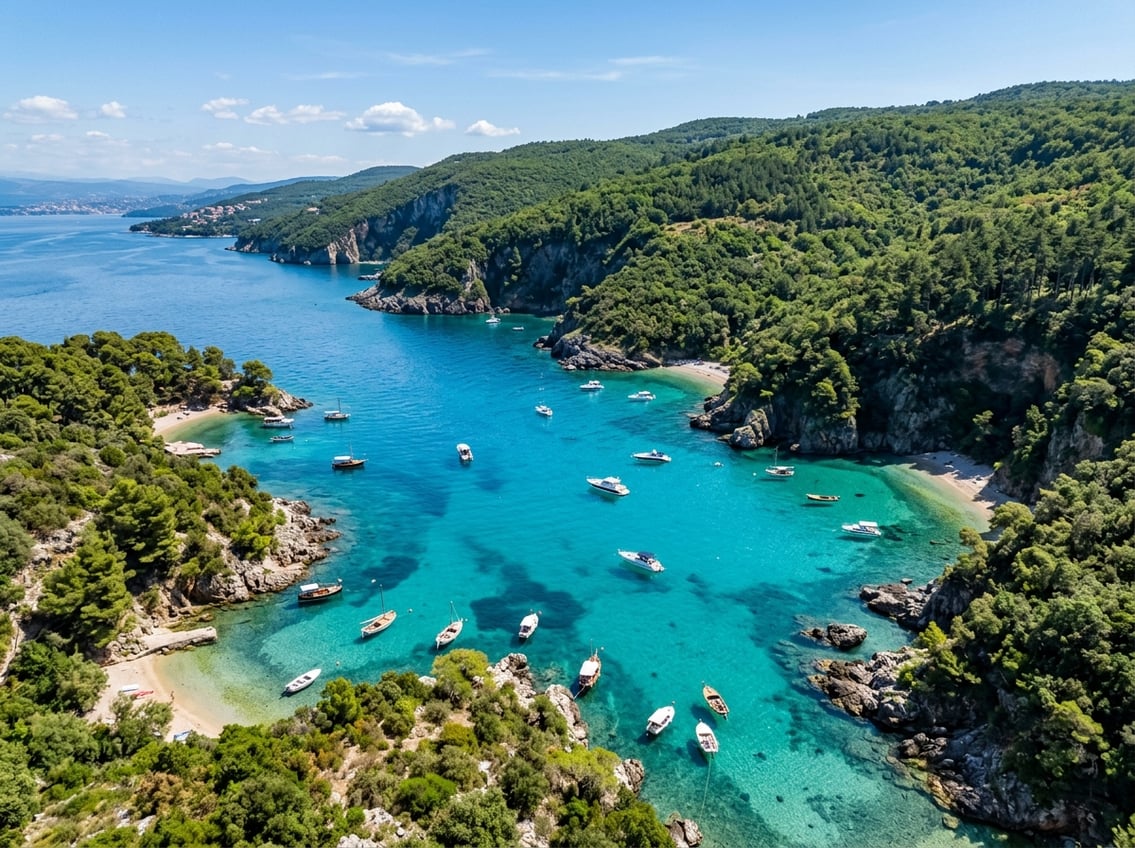
10 Bays You Have to Reach by Boat From Opatija
Opatija sits right at the edge of Kvarner Bay, and honestly, many of the best swimming spots are impossible to reach on foot.
The 10 bays you can only get to by boat stretch from hidden coves along the Opatija Riviera to remote anchorages near Cres Island, Mali Lošinj, and even the tiny islands of Olib and Ilovik.
The top boat-only bays? Think Šip Cliff's Little Blue Cave, Beach Peć near Brseč, the coves below Mošćenička Draga, quiet inlets south of Lovran, swimming stops off Ičići and Ika, cliff-hidden bays beneath the Riviera, west Cres coves, sheltered stops near Cres Town, swim bays on the route toward Mali Lošinj, and small-island anchorages linked to Olib and Ilovik.
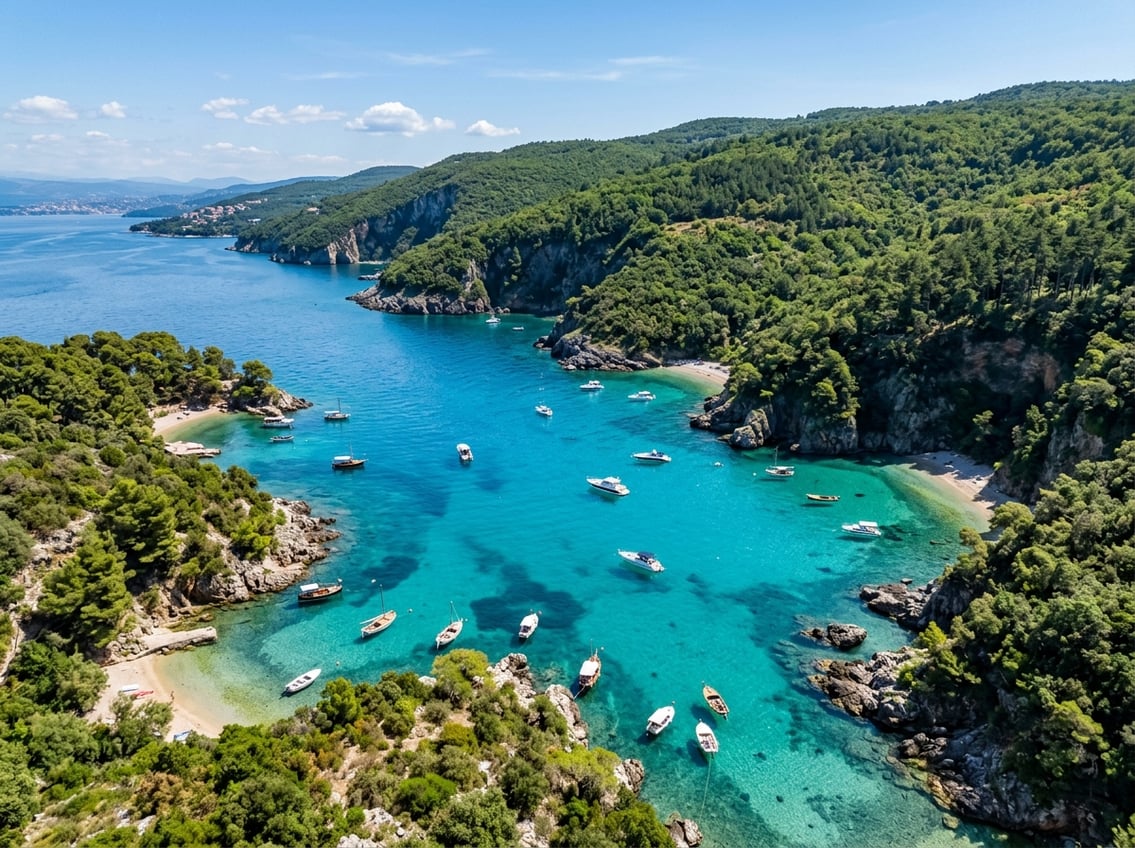
Some of these spots are just 15 minutes from the harbor. Others need a full-day crossing.
Picking the right bay—and timing it well—can totally make or break your boat day.
The 10 Bays Worth Prioritizing First
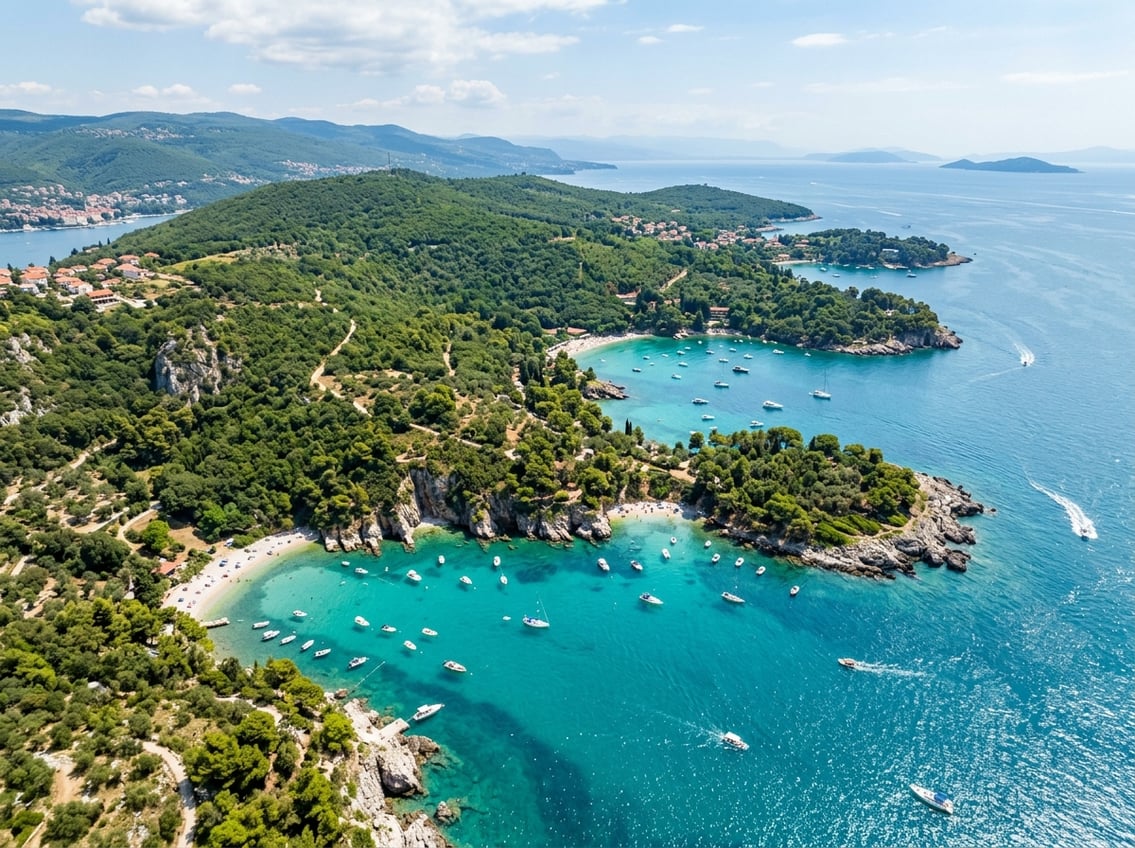
There’s a real mix here: from a cliff-side blue cave less than an hour south of Opatija to island anchorages that require an all-day trip.
Every stop along the Opatija Riviera and out toward Cres, Mali Lošinj, Olib, and Ilovik gives you something different—maybe wild rock formations, crazy-clear shallows, or just that rare sense of being totally alone.
Šip Cliff and the Little Blue Cave
Šip Cliff lies along the southern coast below the Opatija Riviera, where limestone walls drop right into the sea.
A narrow crack in the rock leads to the Little Blue Cave, a small sea cavern where sunlight bounces through the water and everything glows blue.
Boat tour operators in Opatija usually include this on their half-day trips, which take about four hours round-trip.
You can’t swim inside the cave—it’s too tight—but the water just outside is ridiculously clear, and you can see several meters down.
Snorkeling here is best early in the day before the wind stirs things up.
Beach Peć Near Brseč
Beach Peć is a slim pebble cove tucked under steep cliffs just north of Brseč, a village perched high above the sea.
No road leads here. You either arrive by boat or brave a steep, unmarked trail that most people skip.
The beach is tiny, about 30 meters across, with rock walls that throw shade in the afternoon.
Full-day Cres-bound boat tours from Opatija often stop here on the way south.
The water gets deep fast, which makes it a solid spot for snorkeling right off the beach.
Bays Below Mošćenička Draga
Mošćenička Draga marks the last proper village on the Opatija Riviera before the coast gets wild.
Below it, you’ll find a string of little bays at the bottom of thick forested hillsides. Most don’t even have names.
Organized boat tours running three-hour Riviera routes usually stop for lunch in one of these coves.
The pebble beaches here are way quieter than anything you can reach by car, even in the middle of summer.
Water in these sheltered spots often feels a bit warmer, since the cliffs block the wind.
Quiet Coves South of Lovran
Once you get south of Lovran, the coast turns rockier and the road veers away from the water.
That leaves a string of little coves most tourists never notice.
They’re too tiny for beach bars or sunbeds, but if you’re on a boat, they’re perfect for a swim.
Some have flat rocks where you can climb out and dry off.
Boats can pull in easily, with two to three meters of depth right up to the shore.
Operators heading toward Mošćenička Draga know these well and usually pick whichever cove has the calmest water that day.
Swimming Stops Off Ičići and Ika
Ičići and Ika are two small towns between Opatija and Lovran.
Both have harbors, but the best swimming isn’t at the public beaches—it’s at the rocky inlets just offshore or around the headland.
Private boat hires from Ičići Marina can reach these spots in under ten minutes.
The water’s super clean because the rocky bottom keeps sediment away.
Some inlets have submerged boulders that turn into natural pools at low tide, which is great if you’re bringing kids who want calmer water.
Hidden Inlets Beneath the Opatija Riviera Cliffs
Between Volosko and Lovran, the Riviera’s cliffs are much taller than they look from the main walkway.
At the base, small inlets form where the sea’s carved into the limestone.
You can’t see these from above.
Only small motorboats fit into most of them, so they stay peaceful.
The rock walls echo the sound of the sea, which is kind of neat.
Even in peak season, you’ll probably have the place to yourself.
On a calm day, these inlets might be the most peaceful spots in all of Kvarner Bay.
West Cres Coves Reached on Longer Day Routes
The western coast of Cres Island faces open sea and feels wild compared to the eastern side.
You’ll need a full-day boat trip from Opatija—think seven or eight hours—but it’s worth it.
These coves have white and grey pebble beaches, dense forest right down to the water, and crazy-clear sea where you can see five or six meters deep.
Some tours hit two or three coves in one day, with plenty of time for swimming and snorkeling.
If you’re lucky, you might spot griffon vultures circling above the cliffs.
Sheltered Stops Near Cres Town Approaches
As you approach Cres Town from the west and northwest, you pass several sheltered bays that work as natural harbors.
A few have sandy or fine-pebble bottoms, which is rare in Kvarner where rocks rule.
Tour boats heading to Cres often anchor here for a swim and snack before heading into the harbor.
The water stays calm, protected by the headlands from the bura wind.
If your boat has paddleboards, this is a good place to use them.
Remote Swim Bays on the Route Toward Mali Lošinj
The sea passage between Cres and Mali Lošinj runs through a narrow channel with small bays on both sides.
These are proper off-the-grid stops—the nearest road might be kilometers away through thick forest.
Getting here from Opatija takes a long day, sometimes eight hours or more.
But the water clarity is unreal.
Local fishermen have used some of these bays for generations, and you’ll spot old stone jetties here and there.
Swimming is lovely, with gentle entries and barely any current.
Small-Island Anchorages Linked to Olib and Ilovik
Olib and Ilovik are small islands farther south in the Kvarner archipelago.
Hardly any tourists make it out here, which is exactly why you should go.
The anchorages have turquoise water over sandy bottoms, and the beaches are almost always empty.
Getting to Olib or Ilovik from Opatija by private boat takes a full day.
Organized tours rarely go this far, so private boat hire is your best bet.
The islands themselves have tiny villages and maybe a restaurant or two, so you can pair a swim with a simple waterfront lunch.
If you want to feel properly remote but stay in Croatia, these anchorages are tough to beat.
Where to Depart and How the Route Changes
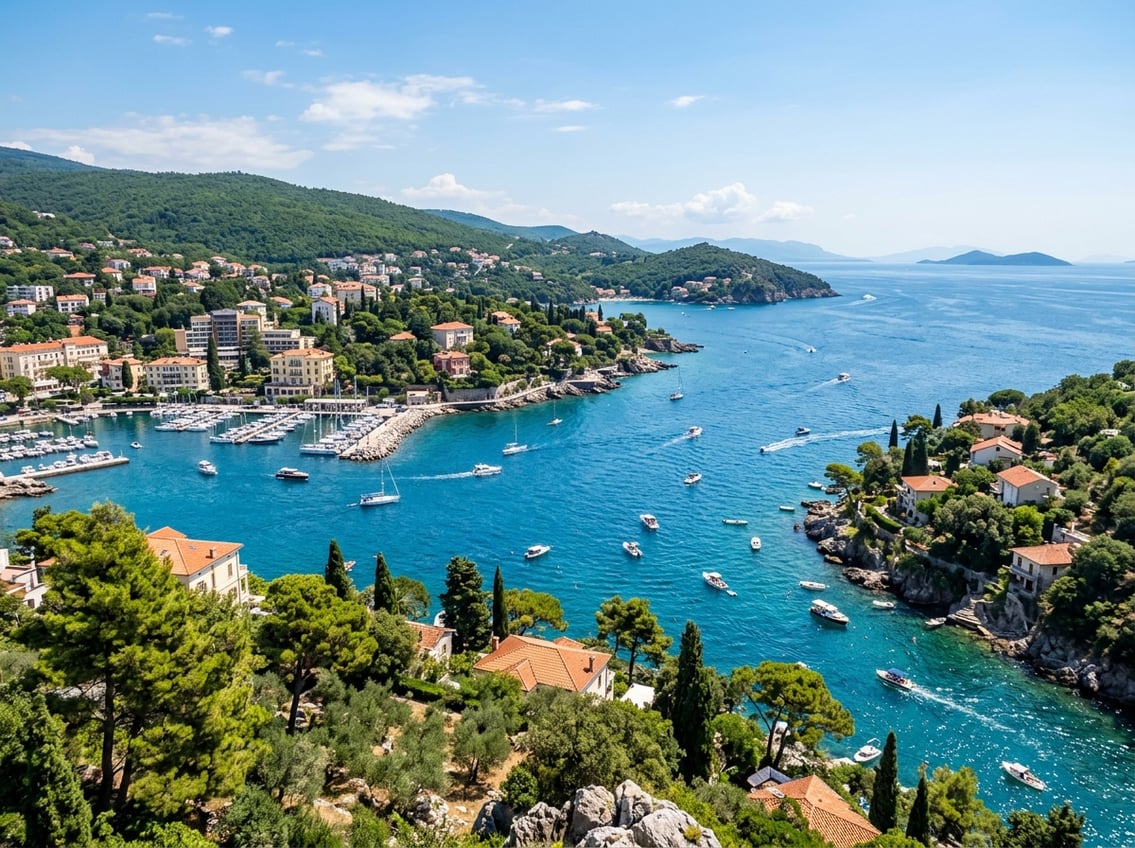
Where you start along the Opatija Riviera totally changes which bays you can reach, how long it’ll take, and how much fuel you’ll burn.
Opatija Harbor, Ičići Marina, Lovran’s waterfront, and the little port at Volosko all offer different options.
Starting From Opatija Harbor
Opatija Harbor is the main departure point for most organized boat tours.
It’s roughly in the center of the Riviera, so it works for trips heading north or south.
Most half-day excursions and Little Blue Cave tours leave from here.
You can walk to the harbor from the main hotel district and Lungomare promenade, which is handy if you don’t have a car.
Morning departures, usually between 9:00 and 10:00 a.m., are most common.
The harbor is pretty small, so in high season, boats sometimes tie up next to each other.
Arriving a few minutes early makes boarding less hectic.
Using Ičići Marina for Faster Southbound Access
Ičići Marina sits about two kilometers south of central Opatija.
If you want to head south toward Mošćenička Draga, Brseč, or Cres Island, leaving from Ičići saves you 15 to 20 minutes compared to Opatija Harbor.
The marina is more modern, with better facilities for private boat hires—fueling and parking are easier.
It’s a great base for full-day island trips since you save time on the way out.
Several private charter companies work out of Ičići rather than Opatija.
Lovran as a Practical Base for Riviera Coves
Lovran is near the southern tip of the Riviera and gives you instant access to the quieter coves that take longer to reach from Opatija.
Boats leaving from Lovran’s small harbor can reach the cliff-base inlets south of town in five minutes or less.
If you’re focused on the Riviera’s southern bays, Lovran is the smartest place to start.
The town feels calmer and less touristy than Opatija, which some people really like.
There aren’t as many organized tours here, so you’ll probably need a private boat hire or to arrange a pickup ahead of time.
Volosko Departures for Short Scenic Cruises
Volosko sits on the northern edge of the Opatija Riviera, just a short walk from the center of Opatija. The harbor’s tiny—maybe a dozen boats fit in—but somehow a few operators manage to run scenic one-hour cruises from here.
These boat rides usually head north along the coast toward Rijeka or dip south past the Opatija waterfront. They're not meant for hidden coves or secret beaches. It's really about catching the Riviera’s architecture and the Lungomare from the water. Drinks are included, and in summer, you can even catch a sunset departure. If you’re after a quick taste, Volosko’s cruises are more of a scenic appetizer than a full meal.
Short Coastal Runs Versus Full-Day Island Crossings
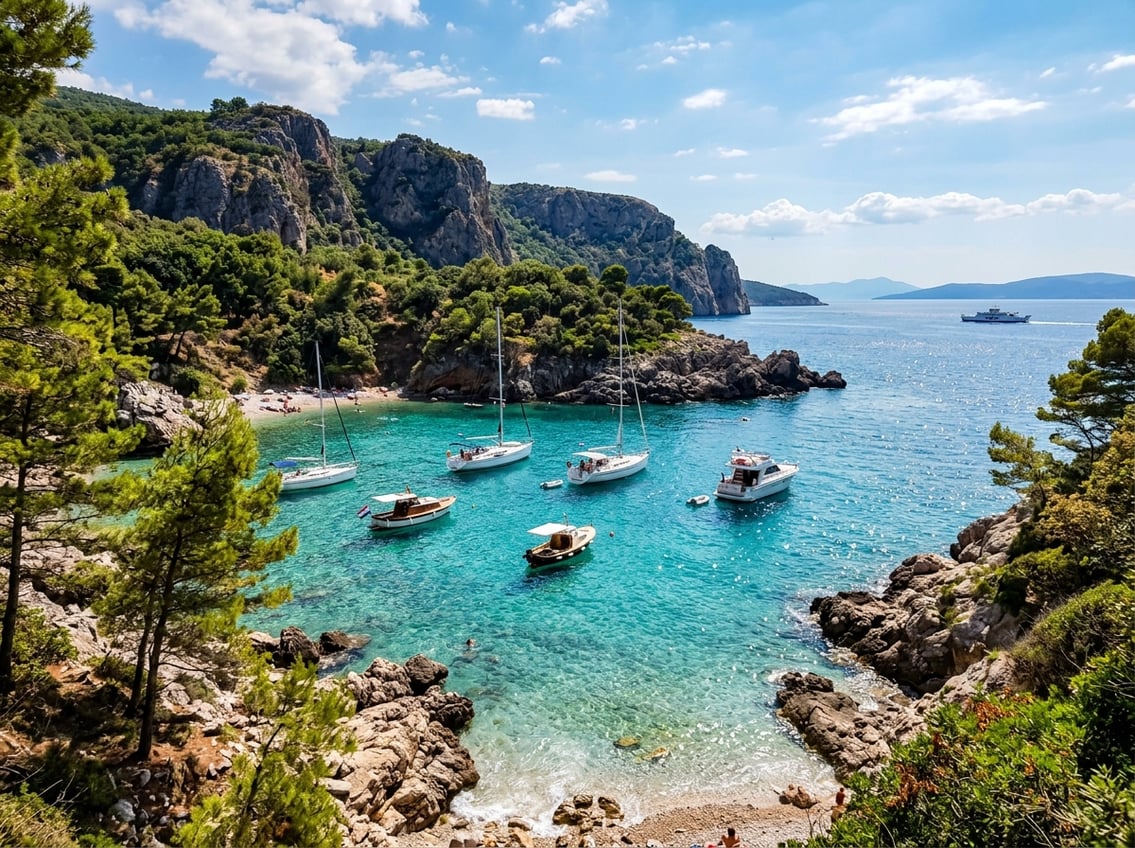
A three-hour Riviera cruise and a seven-hour Cres Island crossing are worlds apart. The scenery, sea conditions, and types of stops change completely. Honestly, matching the trip to your mood, the weather, and how much energy you have is a smart move.
Best Options for a Half-Day Excursion
A half-day trip—usually three to four hours—covers the Opatija Riviera from Volosko down to Mošćenička Draga. That’s enough for two or three swim stops, a peek at the Little Blue Cave, and a cruise past the main towns.
These trips are perfect if you’re short on time or just want the afternoon for something else. Most organized half-day tours throw in drinks, and some hand out snorkeling gear. The four-hour Little Blue Cave excursion is the most popular half-day option, and boats leave most mornings from Opatija Harbor. Prices usually sit between €40 and €70 per person, depending on the season and which operator you pick.
When a Full-Day Crossing to Cres Makes Sense
A full-day Cres crossing takes about seven to eight hours. You’ll usually get four swim stops, a snack or some fruit, and drinks. The boat heads out over open water between the mainland and Cres, so the sea state matters more than on coastal trips.
This trip is best if you’re staying at least three or four days in Opatija and have already checked out the coastline. Cres’s western beaches feel totally different—wilder, quieter, and just more remote. Calm weather is a must. If winds climb above 15 to 20 knots, most operators cancel or reschedule. Flexibility definitely helps.
Some full-day Cres tours swing by Beli, a historic village on the island’s north end. There, you can check out griffon vulture conservation sites or even try a zip line if your group’s up for it.
How Island-Hopping Routes Extend Beyond the Riviera
If you’re an experienced boater or you’ve rented a private vessel, Kvarner Bay really opens up. You can head south to Mali Lošinj or push farther out to Olib, Ilovik, or even the northern tip of Pag Island.
These are serious trips—full-day or even multi-day routes. For example, a private boat hire to Olib from Opatija is roughly 50 nautical miles each way, so you’ll need a fast boat or plan to stay overnight. The reward? Anchorages and beaches that barely see tourists, even in August.
| Route | Approx. Time (One Way) | Best For |
|---|---|---|
| Riviera coastal run | 30 min to 1.5 hrs | Quick swim stops, scenic cruising |
| Opatija to Cres | 2 to 3 hrs | Remote beaches, snorkeling, wildlife |
| Cres to Mali Lošinj | 1 to 1.5 hrs | Extended island exploration |
| Opatija to Olib/Ilovik | 4+ hrs | Total seclusion, sandy anchorages |
What You Will See Before You Reach Open Water
The first 20 minutes after leaving Opatija Riviera by boat pass some of the most recognizable landmarks on Croatia’s northern Adriatic. The view from the water is a totally different vibe than walking, and a few of these sights are worth a mention before you hit open bays.
The Lungomare From the Sea
The Lungomare—Opatija’s famous seaside promenade—runs about 12 kilometers from Volosko to Lovran. On land, it’s a shaded walkway lined with villas and gardens. From the water, it’s a different story.
You’ll notice how the promenade hugs the rocky coastline, with walls and staircases dropping down to bathing platforms. Habsburg-era villas stack up the hillside, looking almost theatrical. On a clear morning, the whole Riviera feels like a vintage postcard, which, honestly, is what they were aiming for when they built it.
Central Opatija Landmarks on the Waterfront
As you pass central Opatija by boat, Villa Angiolina stands out—a pale yellow mansion surrounded by Angiolina Park, dating back to 1844. This place basically kicked off Opatija’s resort era.
Just north, the Maiden with the Seagull statue perches on a rock at the water’s edge. It’s one of Croatia’s most photographed spots, and seeing it from the sea is way more peaceful than dodging crowds on the promenade. The grand hotels along the central waterfront look impressive from offshore, their ornate facades facing the sea, just as the original designers intended.
The Riviera Settlements Lined Along the Coast
Heading south from Opatija, you’ll pass Ičići, then Ika, then Lovran—one after another. Each has its own harbor and a different personality.
Ičići is the most modern, with a newer marina and resort feel. Ika is tiny—just a handful of stone houses around a small harbor. Lovran is the most historically rich, with a medieval old town visible from the water and some defensive walls still holding on along the waterfront. The tower of St. George’s Church pops up above the rooftops and helps boats navigate from the north.
Selecting the Right Excursion Without Wasting Time
Picking between a private boat hire and a group tour, knowing when trips sell out, and checking the weather before you book—these are the choices that really shape your day on the water from Opatija.
Private Boat Hire or Organized Boat Tour
An organized boat tour from Opatija usually costs €40 to €100 per person, depending on how long you’re out and what’s included. These trips follow set routes, with set swim stops, drinks, and sometimes snacks. You just show up and relax.
A private boat hire costs more (typically €300 to €600 for half a day, €500 to €1,000+ for a full day), but you call the shots. Your group decides which bays to visit and how long to linger. If you’re a family or a group of four to six, the per-person price can actually get close to the group tour, but you get way more flexibility.
The best choice really depends on your group. Solo travelers or couples usually get better value with group tours. Groups of four or more might want to go private.
Signs That a Popular Departure May Sell Out
The most popular Opatija boat tours—especially the Little Blue Cave half-day and the full-day Cres trip—often sell out two or three days in advance during July and August. Weekends and holidays go even faster.
Some signs that spots are running low:
- The operator’s booking page only shows a couple of dates left for the week
- Morning departures are gone, but you can still grab an afternoon slot
- The operator nudges you toward a different date when you reach out
Booking at least three days ahead in peak season is smart. In May, June, or September, you can usually be a bit more relaxed.
Weather, Timing, and Sea-State Considerations
Wind is the big wild card for boat trips on Kvarner Bay. The bura (cold northeast wind) can show up fast and turn flat seas rough in no time. The jugo (warm southeast wind) builds slowly but kicks up bigger swells.
Most operators check forecasts the night before and will call to reschedule if things look dicey. You should, too. The Croatian Meteorological Service posts marine forecasts online.
Early morning departures, between 8:00 and 10:00 a.m., usually mean calmer water. Afternoons bring breezes that can make the ride back bumpier than the way out. If you’re choosing, morning departures usually win for comfort.
How to Fit a Bay Trip Into a Wider Opatija Stay
You don’t have to make your boat day the only plan. Opatija’s small size and good transit make it easy to pair a cruise with a stroll in town, a Lungomare walk, or even a quick trip to Rijeka.
Pairing a Morning Cruise With an Afternoon in Town
A three-hour morning boat tour gets you back by 1:00 p.m., so you’ve got the whole afternoon open. From the harbor, Angiolina Park and Villa Angiolina are just five minutes away. The park’s full of plants from all over—East Asia, South America, the Mediterranean—and it’s free.
Cafes and restaurants along the waterfront start filling up at lunch, so heading straight from the boat to a table is easy. Afterward, you can walk the northern Lungomare toward Volosko, with plenty of shade and views back at Opatija.
Combining a Boat Day With Walks and Nearby Excursions
If you’re staying three nights or more, here’s a solid plan: one day on a boat, one day walking the Lungomare end to end, and one day exploring inland, like Mošćenice or Učka Nature Park.
The Lungomare walk from Volosko to Lovran is about 12 kilometers, taking three to four hours at a relaxed pace. Doing the walk after a boat trip helps you connect the dots—those coves you saw from the water show up again from the path. It’s a nice way to tie the whole experience together.
Using Opatija as a Base for Rijeka and Island Add-Ons
Rijeka sits just about 15 kilometers from Opatija. You can hop on a bus and get there in roughly 30 minutes.
Some boat tours from Opatija even swing by Rijeka. Usually, you get a couple hours to wander the Korzo, which is that lively pedestrian street in the center, before heading back by boat.
If you’re craving more time on the islands, Opatija makes a pretty solid base. You can drive about 40 minutes south to Brestova and catch a ferry to Cres—ferry ride takes another 20 minutes.
Krk Island is another option. There’s a bridge from the mainland near Rijeka, so you can just drive over.
Honestly, it’s better to spread out these trips. Trying to cram both an Opatija bay tour and an island visit into one day just feels rushed and kind of misses the point.